Intermediate Japanese Class at Blue House Okinawa
Say More Than What Happened
Explain What Happened, How You Felt, and Why It Matters
You can already communicate in Japanese.
Now you want to explain more — what happened, how you felt, why you think something, and what you want the other person to understand.
Intermediate helps you build the grammar, vocabulary, and sentence connections you need for longer, more detailed conversations.
Schedule
Tuesday & Thursday
— choose
1:15–2:25 PM,
6:20–7:30 PM,
or 8:10–9:20 PM
2 lessons per week · 1 month
Tuition
¥27,700 by the 20th
¥33,900 after the 20th
Registration Fee: ¥11,000
Intermediate Materials: ¥9,240
First Payment
By the 20th: ¥47,940
After the 20th: ¥54,140
On This Page
Move Beyond Simple Answers
At this level, the challenge is often not making one correct sentence.
It is connecting several thoughts together.
You may want to tell someone about a trip, explain why you made a decision, describe something that happened at work, compare two things, or share your opinion.
Intermediate gives you more ways to organize those ideas and express them in Japanese.
Is Intermediate the Right Level for You?
You do not have to guess which level comes next.
If you have studied Japanese before, take the online level check to see where your current Japanese fits.
Pre-Intermediate
Build longer everyday answers and learn to keep conversations going.
Intermediate
Explain experiences, reasons, opinions, comparisons, and more detailed ideas using stronger grammar and vocabulary.
JLPT
Choose JLPT Test Prep if your main goal is preparing specifically for the Japanese Language Proficiency Test.
See What You’ll Learn in Intermediate
Intermediate is divided into three stages.
If you have studied Japanese before, compare the topics, grammar, and examples below with what you already understand and use.
The goal is not only to learn more grammar.
As you move through Intermediate, you gain more ways to describe situations, explain reasons, compare choices, talk about experiences, and connect your ideas in greater detail.
Intermediate 1
Intermediate 1 expands the ways you can describe people, food, travel, experiences, and everyday situations.
You’ll practice 〜そうです for describing how something appears, 〜ので for giving reasons, and 〜たほうがいい / 〜ないほうがいい for giving advice.
You’ll also work with expressions such as 〜てから / 〜ないで, potential forms such as 〜られます, and 〜し〜し for connecting multiple reasons or characteristics.
Examples
彼女はやさしそうな人ですね。
She seems like a kind person.
私はアレルギーがあるので、えびとかにが食べられません。
I have allergies, so I can’t eat shrimp or crab.
ダイビングのどうぐは借りたほうがいいですか。
Is it better to rent diving equipment?
Intermediate 2
Intermediate 2 gives you more ways to talk about experiences, wishes, plans, work, events, shopping, and choices.
You’ll practice 〜たら for conditions, potential expressions such as 〜られます, and comparisons using 〜より〜のほうが.
You’ll also work with もう / まだ, 〜てしまいました, 〜にくい / 〜やすい, and 〜しか〜ません so you can describe limitations, completed actions, and how easy or difficult something is to do.
Examples
日本まつりのボランティアをしたいと思っています。
I’m thinking about volunteering at the Japan festival.
今年は休みが4日間しかなかったので、旅行には行きませんでした。
I only had four days off this year, so I didn’t go on a trip.
中が広くて、食べ物をとりだしやすいし、そうじもしやすいし、買ってよかったです。
It’s spacious inside, food is easy to take out, and it’s easy to clean, so I’m glad I bought it.
Intermediate 3
Intermediate 3 expands into topics such as history, culture, the environment, habits, changes, and personal experiences.
You’ll practice 〜ても and 〜ために, as well as expressions such as 〜ようにしています / 〜ないようにしています for talking about habits and things you make an effort to do or avoid.
You’ll also work with 〜てあります / 〜たまま, 〜かもしれません, and 〜ようになりました / 〜なくなりました for describing situations, possibilities, and changes over time.
Examples
日本の文化をもっと知るために、毎月10日と25日にセミナーがあります。
There are seminars on the 10th and 25th of every month to learn more about Japanese culture.
私はごみをへらすために、できるだけスーパーのふくろをもらわないようにしています。
To reduce waste, I try not to take plastic bags from the supermarket whenever possible.
大きい自転車を買ったので、小さいのがいらなくなりました。
I bought a larger bicycle, so I no longer need the smaller one.
Which Intermediate Level Feels Closest to You?
Intermediate 1 may be a useful starting point if expressions such as 〜そうです, 〜ので, 〜たほうがいい, or 〜し〜し still feel new.
Intermediate 2 may be closer if those feel comfortable but 〜たら, 〜てしまいました, 〜にくい / 〜やすい, or 〜しか〜ません are less familiar.
Intermediate 3 may be the better comparison when the earlier material feels comfortable but 〜ために, 〜ようにしています, 〜てあります, 〜かもしれません, or expressions for changes over time still need practice.
Already comfortable with most of these?
You may want to compare your goals with JLPT Test Prep or another Japanese class option.
Prepare Japanese About Your Own Life
Your learning continues between classes.
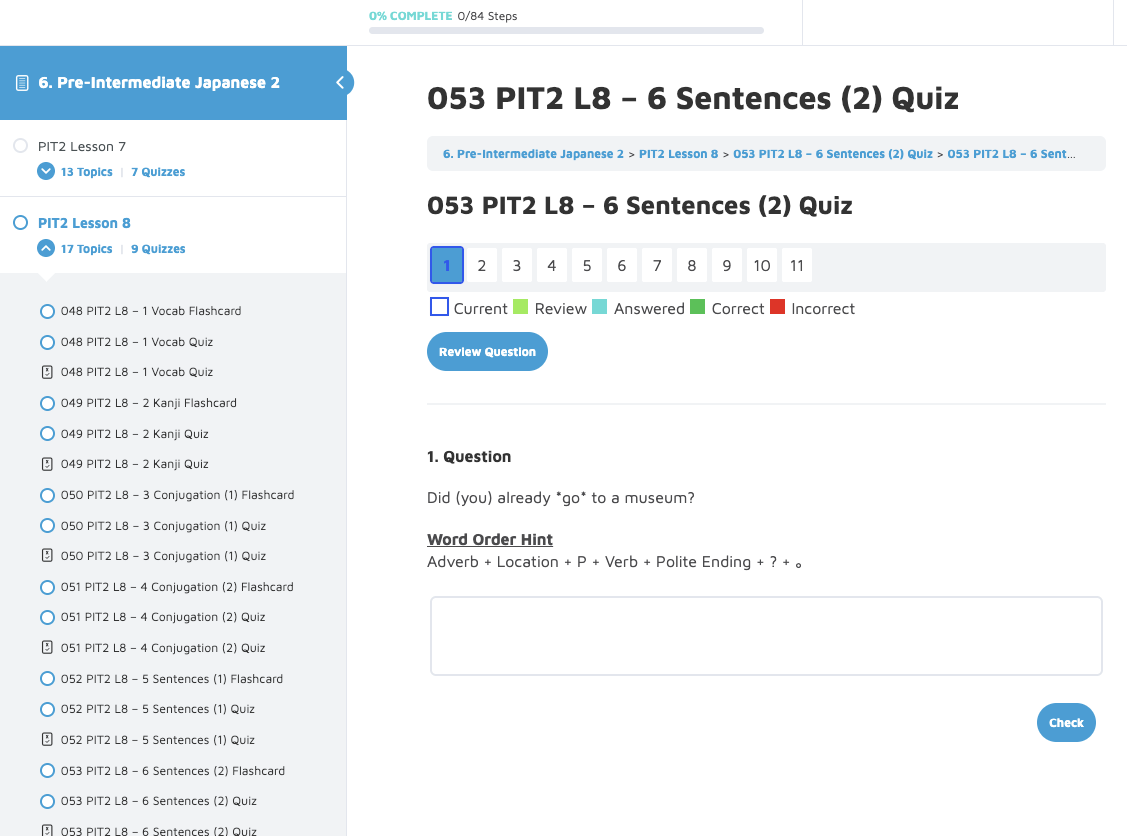
Study Room and Workbook activities give you time to work with new grammar and vocabulary before you use it in conversation.
You can connect what you are learning to your own experiences, opinions, plans, and everyday life.
That way, the Japanese you bring into class already has a reason to matter to you.
Check How You Want to Say It
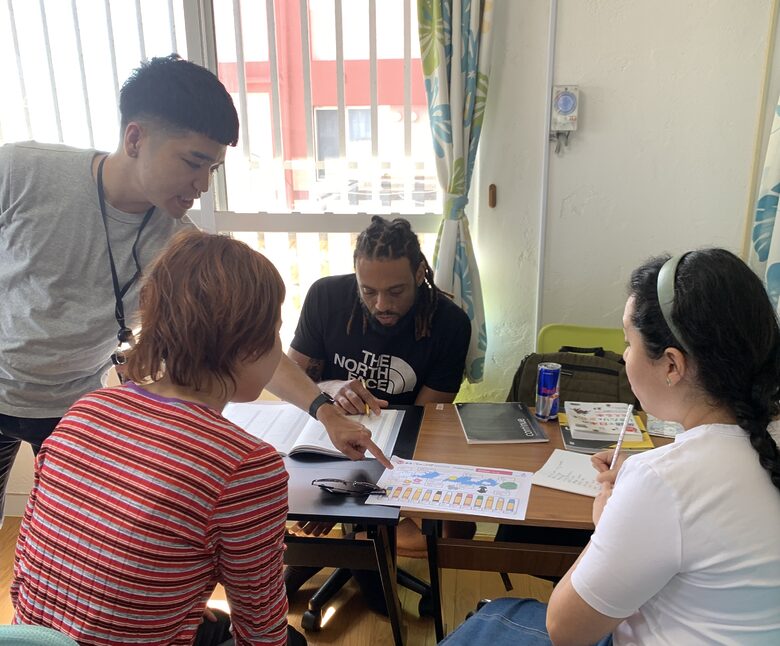
In class, bring in what you studied and the parts you were not sure about.
You can check grammar, vocabulary, sentence connections, and pronunciation with your teacher, then practice saying your ideas out loud.
Sometimes the Japanese may be technically understandable but not quite express what you wanted to say.
Class gives you a place to notice that difference, adjust it, and try again.
The goal is not just a correct sentence. It is expressing what you actually mean.
Use More of Your Japanese in Real Conversations
Once you have practiced how to express an idea, take it into a real conversation.
Language Exchange gives you a chance to use your Japanese with Japanese students who are learning English too.
A real conversation may go in a direction you did not expect.
Someone may ask a follow-up question. You may need to explain something another way. You may hear a word you have never heard before.
Those moments give you a reason to use more of the Japanese you have been building.
See What Intermediate Study Looks Like
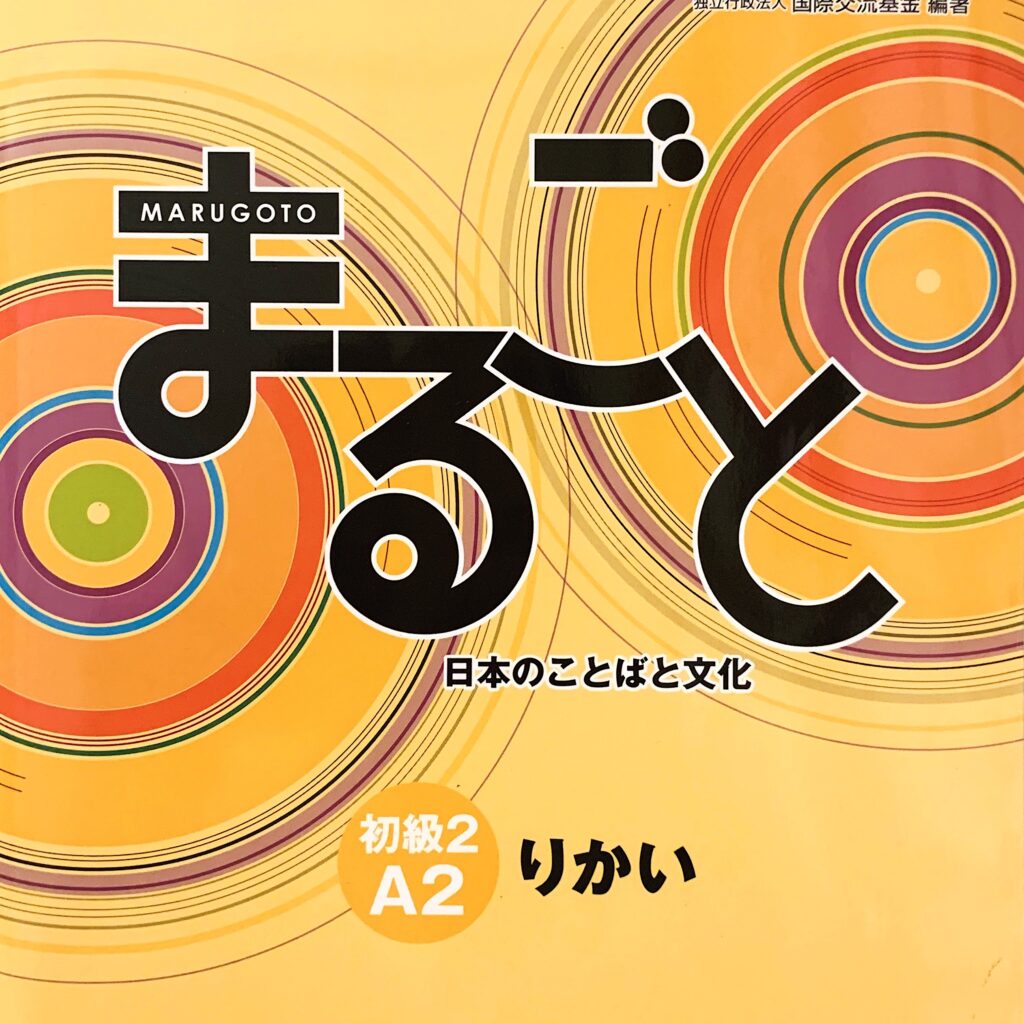
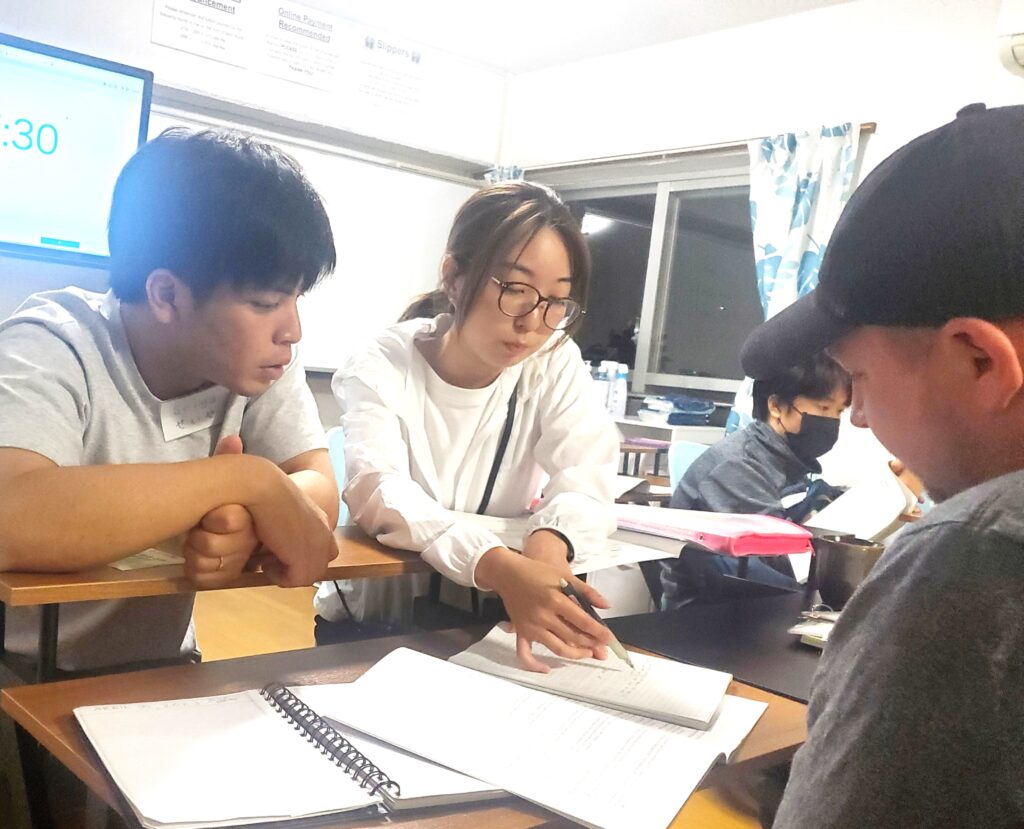
At Intermediate level, it can be difficult to understand what a class is really like from a course description alone.
Seeing the actual materials and classroom makes the next step much easier to picture.
See the Materials
See the Class
Hear from Students
“Blue House Okinawa is a welcoming and fun language and cultural community! The teachers are fantastic and everyone is there for love of learning. The opportunity for native English and Japanese speakers to exchange knowledge and share the learning experience combined with social and educational cultural gatherings can’t be found anywhere else! The small class sizes make sure you feel comfortable asking questions and get a tailored approach to learning. The books, videos, and in class teaching time reinforce the concepts. And the in class exchange ensures you get practice speaking, not just reading and listening!”
— Ms. Stefanie Purdie
Choose How You Want to Take Intermediate
Intermediate is offered through Self-Paced.
That means you move through the Intermediate curriculum according to your own progress while still receiving instructor support in class.
Then choose how you want Japanese to fit into your week.
Fixed Schedule
Choose Fixed if you want the same scheduled class days and times each week.
A regular schedule gives you a consistent routine while you continue through the Intermediate curriculum at your own pace.
Schedule
Choose one:
- Tuesday & Thursday 1:15–2:25 PM
- Tuesday & Thursday 6:20–7:30 PM
- Tuesday & Thursday 8:10–9:20 PM
Frequency: 2 lessons per week
Tuition
¥27,700 by the 20th
¥33,900 after the 20th
Registration Fee:
¥11,000
Intermediate Materials:
¥9,240
First Payment Total
By the 20th: ¥47,940
After the 20th: ¥54,140
Flex
Choose Flex if you want more control over when and how often you come.
With Flex, you choose the number of lessons you want, then book from the Japanese classes available on the weekly schedule.
You can use Flex for a lighter pace, such as one lesson a week, or choose a larger Flex plan and build a more intensive schedule.
Flex
Book available Japanese lessons from the current weekly schedule.
Registration Fee:
¥11,000
Intermediate Materials:
¥9,240
Not Sure What to Study Next?
If you can already handle everyday Japanese but still feel limited when you want to explain more, Intermediate may be the next step.
If you are still working on making everyday conversations longer, Pre-Intermediate may fit better.
If your main goal is practical speaking without following the full reading, writing, and grammar path, Conversation Class is another option.
If you are preparing specifically for the Japanese Language Proficiency Test, JLPT Test Prep follows a different path.
You can take the online level check if you are not sure where your current Japanese fits.
Ready to Express More in Japanese?
You already have Japanese to work with.
Intermediate helps you connect it, expand it, and use it to say more about your experiences, thoughts, and reasons.
What begins as individual sentences can gradually become a fuller conversation.
Not sure which level is right for you?
