Our Stories
Every Change Started with a Student Getting Stuck Somewhere
Why We Kept Changing the Way We Teach Japanese
Over the years, we kept seeing the same thing with language learners.
Students were studying. They understood vocabulary, grammar, and the examples they were working on. But when another person was sitting in front of them, sometimes they would stop and think, “What should I say?”
They were already putting in the work, so telling them to study harder did not feel like the answer.
We started wondering: What was missing between studying a language and actually being ready to use it?
On This Page
Would More Chances to Speak Be Enough?
Giving students more opportunities to speak seemed like a natural answer.
But having time to talk did not always mean they were ready to talk. Even when students knew some of the language, they could still sit down with another person and think, “What should I say?”
That made us realize something important: giving someone a place to speak is not the same as making them ready to speak.
So we started asking a different question: What did students need before they started speaking?
What If Students Prepared What They Actually Wanted to Say?
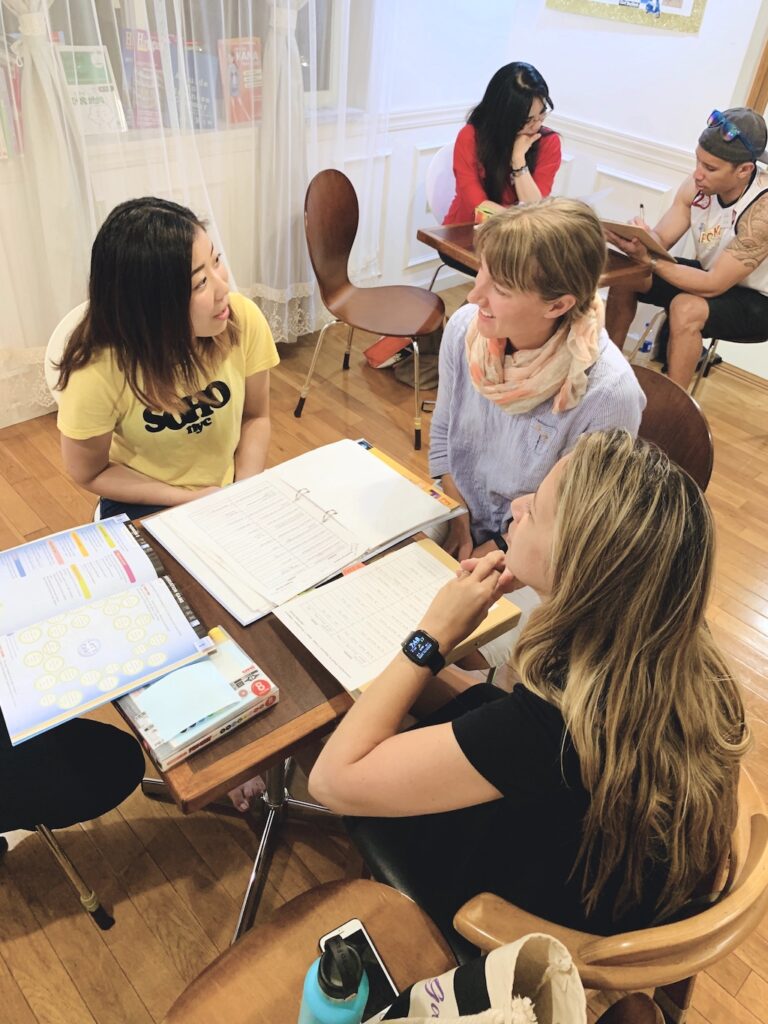
Students had a place to speak, but some still did not know how to begin.
So we started thinking: what if they did not have to invent a whole conversation on the spot? What if they came in with one question they actually wanted to ask, or a little Japanese about themselves they might really want to say?
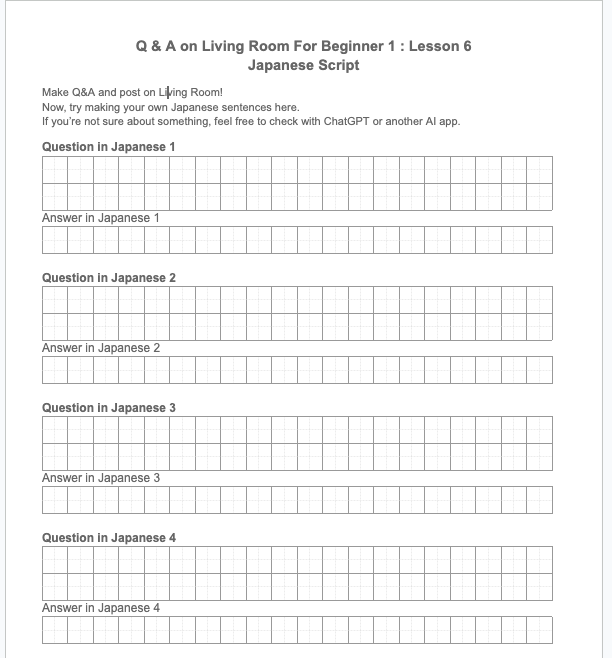
A Japanese worksheet from 2021 asked students:
“Make your own Q&A you’d like to ask in Language Exchange :)”
The idea was simple: not a perfect script — just a starting point that was their own, using the Japanese they were learning for something they genuinely wanted to say.
This same idea can still be seen in the Workbook today. But even after students prepared their Japanese, another question remained: could they remember it when the answer was no longer in front of them?
Seeing the Answer Was Not the Same as Remembering It
Preparing something personal gave students a place to start. But we began noticing another problem: sometimes they knew the Japanese as soon as they saw the answer, but without it in front of them, it was much harder to bring the same Japanese back.
“Oh, right. I know this.” was not quite the same as being able to remember it when they needed it.
So the next question became: what if students needed more chances to take the answer away and try to remember the Japanese on their own?
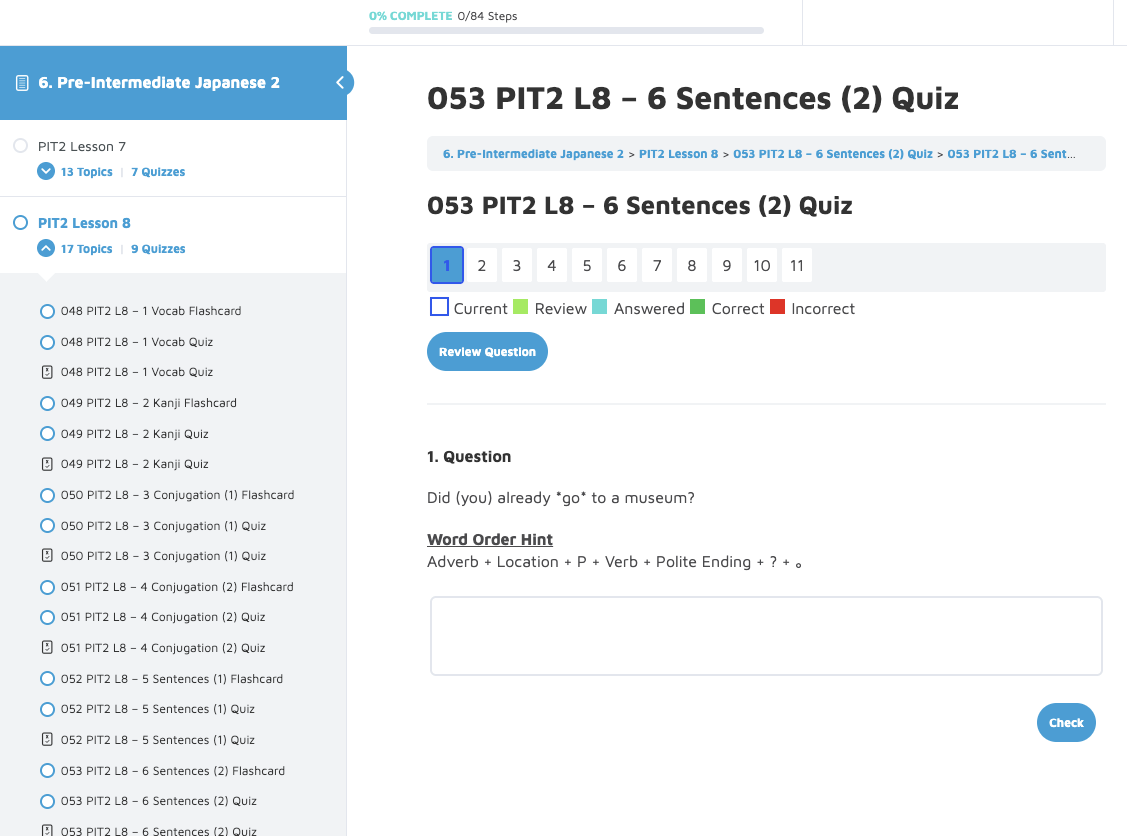
That idea is still part of the learning system today, with recall practice through Flashcards and Quizzes in the Study Room.
But that raised another question for us: if students could do more of that work before class, what should class time be used for?
What Should Class Time Be For?
Once students could review, repeat, recall, and prepare some Japanese on their own, we started looking differently at the time we had together in class.
Some things were easier when students had time to go back, try again, or work at their own pace. Other things became much more useful when a teacher was there.
Class could be the place to bring the parts that were still unclear — ask questions, check the Japanese, work on pronunciation, say it out loud, get feedback, and try again.
That distinction is still part of how the learning system works today: some work can happen outside class, while class gives students support with the things that are harder to do alone.
But another problem was becoming clear: what happens when one student needs more time than another?
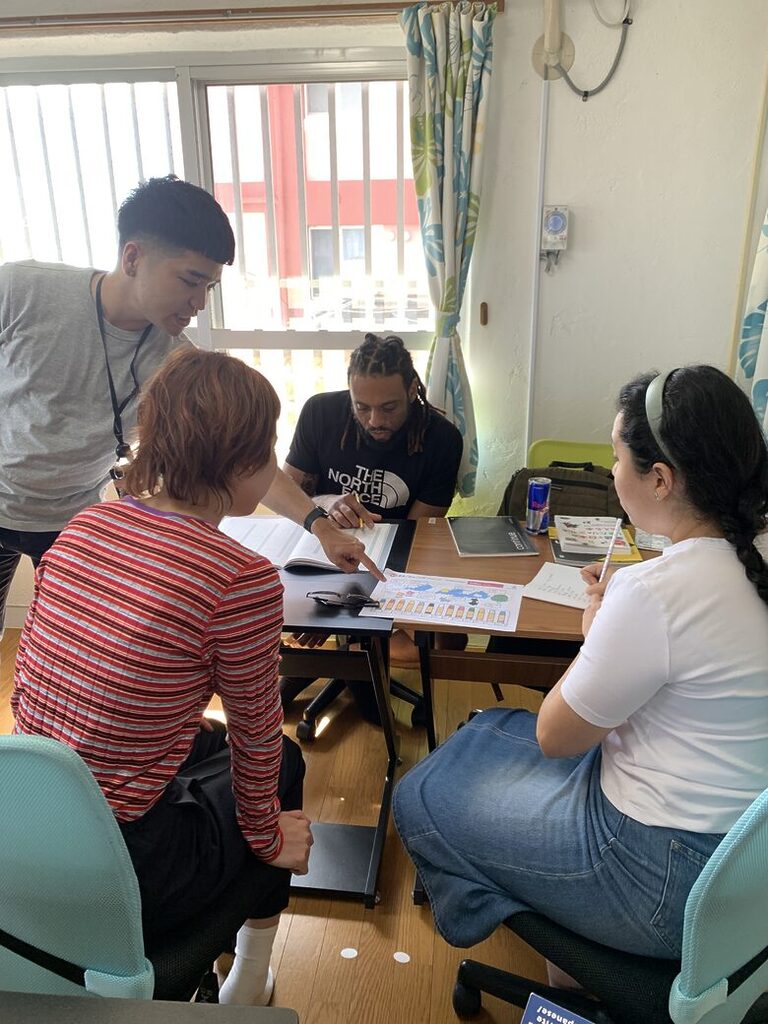
Not Everyone Needed the Same Amount of Time
We kept seeing students fall out of step for different reasons. Someone might miss class because work got busy, while someone else simply needed more time with one part before moving on.
That made us question something we had been taking for granted: learning the same course did not have to mean moving through it at the same speed.
In July 2023, Blue House began offering Self-Paced Japanese classes.
Self-Paced gave students another way to continue through structured Japanese material according to their own progress, while still having instructor support when they needed it.
But even when students could prepare, recall, and move forward at their own pace, one thing was still unpredictable: what another person would say back in a real conversation.
Then the Other Person Answered Back
Students could prepare what they wanted to say, practice it, and check it with a teacher.
But then another person answered — sometimes faster than expected, with a word they had never heard, or in a completely different direction from the example they had practiced.
We could help students prepare their side of the conversation. We could not prepare every answer they were going to hear.
That made something else clear: real conversation had to be part of the learning process, because it showed students what they could understand, where they got stuck, and what they needed to work on next.
Today, Language Exchange gives students an opportunity to take the Japanese they have studied and practiced and see what happens when another person answers back.
But by then, another question was becoming harder to ignore: did every student really need the same learning route?
Not Everyone Needed the Same Route
We were also seeing students get stuck for very different reasons.
One student wanted a clear foundation. Another mainly wanted to speak. Someone else needed more time, wanted to study more intensively, or was working toward a specific goal such as the JLPT.
That made us stop looking for one answer that had to fit everyone. The more useful question became: what does this student need next?
Today, students can make separate choices about what they want to study, how they want to learn, and how they want to attend.
Looking back, we realized something else: we had been solving separate problems one at a time, but the pieces were starting to connect.
Then We Realized the Pieces Had Connected
Looking back, the changes no longer felt like separate pieces.
Each one had answered a different problem we kept seeing.
Students needed something of their own to say, so preparation became important. Seeing the answer was not enough, so recalling it became important. Some things could happen outside class, while class became a place to ask, check, practice, and get feedback.
Not everyone needed the same amount of time. And no matter how much students prepared, a real conversation could still surprise them.
Together, those pieces had started to form a cycle:
Learn → Recall → Make It Yours → Check → Use → Notice → Learn Again
Today, that cycle can move through the Textbook, Study Room, Workbook, class, and Language Exchange.
And We Still Don’t Think It Is Finished
Another student may get stuck somewhere we did not expect.
When that happens, the question is still the same:
Why are they getting stuck here?
And then:
What can we change to make the next step clearer, more useful, or easier to keep going with?
The goal is not to protect a particular worksheet, tool, or way of teaching just because we already use it.
It is to keep looking at what students actually need to move from studying Japanese toward using more of it in their own lives.
If you are ready to see where you might start, compare the Japanese classes and choose the direction that fits what you want to learn.
If you would rather try Blue House first, you can book a Trial Lesson, but it is optional — you can also enroll directly.