Japanese Learning System
Turn What You Study Into Japanese You Can Actually Use
Have you ever understood the Japanese while you were studying, then gone blank when you tried to use it later?
That can happen even when the lesson made sense. Seeing an answer and being able to remember it, make it about your own life, and actually say it to someone are not quite the same thing.
That is why we give you different ways to work with the Japanese you are learning before you take it into a real conversation.
You Need to:
Learn it. Recall it. Make it yours. Check it. Use it.
On This Page
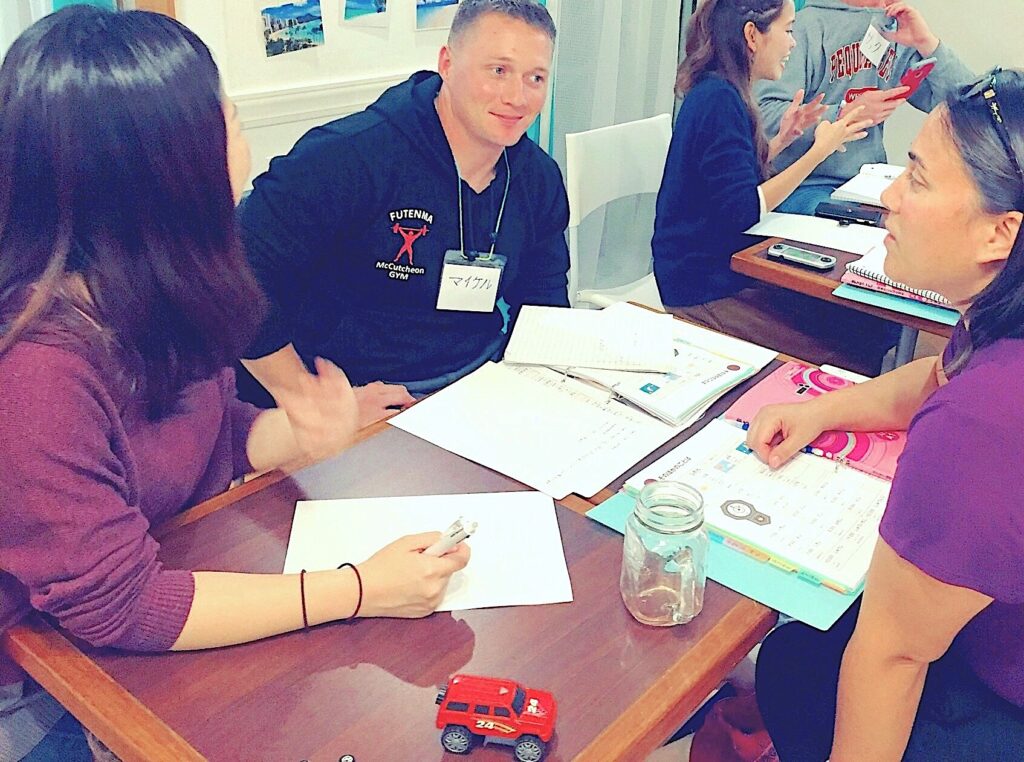
From Learning to Using
Knowing Japanese when the answer is in front of you and being able to bring it back on your own are two different things.
The first time you meet new Japanese, most of your attention goes to understanding it. That is important, but understanding is only the beginning. To use Japanese in a real conversation, you also need chances to remember it without looking, connect it to your own life, check it, and try it with another person.
The goal is not simply to recognize the answer. It is to be able to bring the Japanese back when you need it.
Learn It
Start with new vocabulary, grammar, and expressions.
First, understand what you are learning and give yourself something to work with. You cannot recall or use Japanese that you have not had a chance to understand first.
Recall It
Then take the answer away.
Can you remember the word, expression, or sentence pattern without looking?
Maybe not all of it. That’s okay. Try bringing it back from memory instead of only recognizing it on the page or screen.
Make It Yours
Now connect it to your own life.
Maybe the textbook asks what someone did over the weekend. What did you do over the weekend?
A model sentence can become a question about your work, your family, your plans, or something you genuinely want to know about the person in front of you. The grammar is still the lesson. The reason to use it becomes yours.
Check It
Then comes the question many learners have:
“Is this actually right?”
Check the grammar and pronunciation. Say it out loud. Get feedback. Try it again.
You are not expected to get everything right the first time. Checking gives you a chance to notice what still feels unclear before you depend on it in a real conversation.
Use It
Finally, try using it with another person.
A real answer may not sound like the one you practiced. You may forget a word, misunderstand part of the reply, or need to ask again. That is part of what makes the conversation useful.
Sometimes the most useful result is not, “I said it perfectly.” It is, “Now I know what I need next.”
Use Japanese, notice what happens, and bring the next question back into your learning.
Input is not the finish line. Each stage prepares the next one.
Everything You Need
Blue House Okinawa connects the steps above so the Japanese you study has somewhere to go.
We kept asking the same question: What should happen before a student is asked to speak?
For classes that include home study, we moved more of the reviewing and preparation outside the classroom so class time could be used for questions, pronunciation, practice, feedback, and speaking.
We did not add online tools just to make the class more digital. We added them to make more room for practice.
The tools are not the destination. They prepare you for what comes next.
Textbook — Learn It
Your textbook introduces the vocabulary, grammar, expressions, and activities for each lesson.
It gives you the new Japanese you will keep working with as you review, prepare, practice, and eventually use it.

Study Room — Recall It
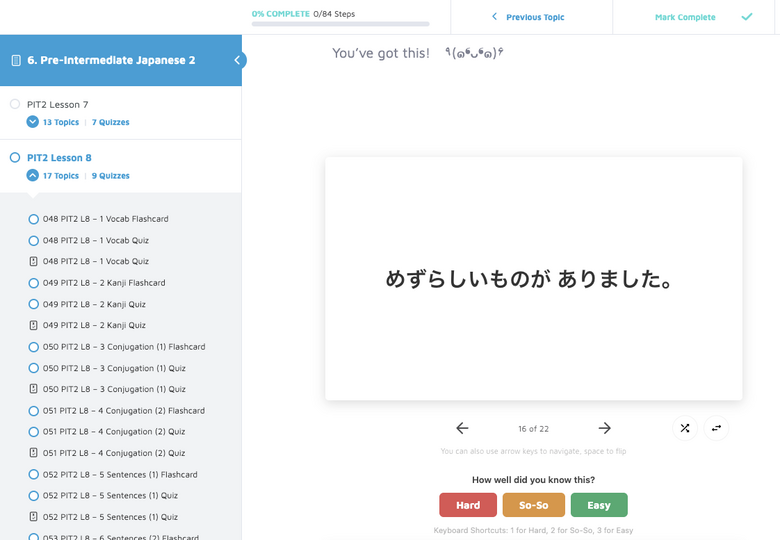
The Study Room is Blue House Okinawa’s online learning space. You can review vocabulary and expressions from your lesson with Flashcards with Audio and Quizzes.
The point is not only to recognize an answer when you see it. You practice bringing the Japanese back from memory so it is easier to recall later when you actually need it.
Workbook — Make It Yours
The Workbook helps you take the grammar and vocabulary from your lesson and connect it to your own life.
Instead of asking only, “What should I study?” you can begin asking, “What do I want to be able to say or understand next?”
Use what you study to prepare questions and answers about your work, weekend, family, interests, plans, and experiences. Preparation gives you something specific to ask, answer, check, or try in class.
The point of preparation is to give your next conversation something to start with.
Bring It Back to Class — Check It and Practice It
In class, you bring that Japanese with you.
Each lesson has two parts.
In the first half of the lesson, you work with your instructor. Ask the questions that came up while you were studying, check the wording, check your grammar and pronunciation, say what you prepared out loud, get feedback, and try again.
This first part gives you time to clarify and practice the Japanese before you use it with another person.
Then, in the second half of the lesson, the class moves into Language Exchange.
At Home
- Review
- Repeat
- Recall
- Prepare
First Half of the Lesson
- Ask questions
- Check what you studied
- Practice pronunciation
- Say Japanese out loud
- Get feedback
- Try again
Second Half of the Lesson
- Language Exchange
- Use the Japanese you practiced
- Listen to a real answer
- Respond
- Notice what you can do and what you want to work on next
Language Exchange — Use It
A teacher can help you check the Japanese, but a real conversation shows you what happens when the answer is not the one you practiced.
In the second half of the lesson, Language Exchange gives you a place to take some of the Japanese you studied and practiced and try using it with another person.
Ask a question. Listen to the answer. If you miss something, ask again.
“Mou ichido itte kudasai.” — “One more time, please.”
You might understand the whole answer, or you might catch only a few words. Sometimes catching one more word the second time is enough to keep the conversation going.
A real answer may be different from the answer you practiced. That is part of the learning.
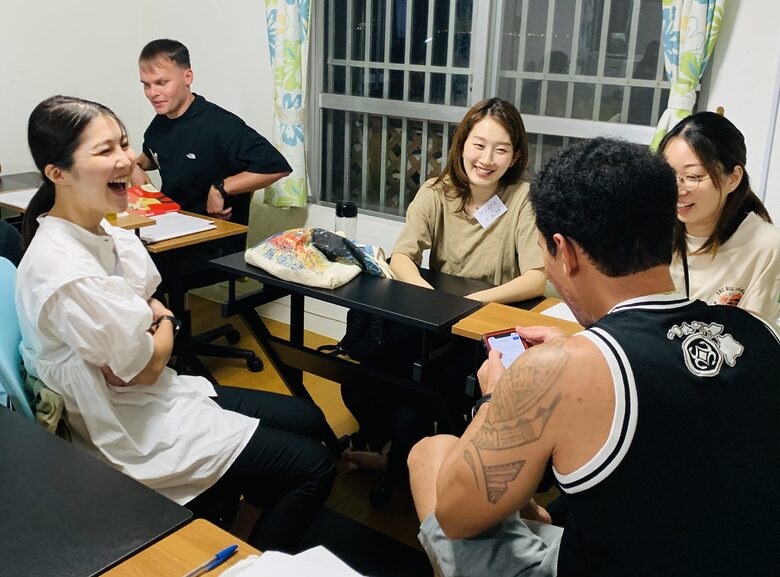
Every Conversation Gives You Something to Bring Back
Maybe you hear a new word or realize you need more listening practice.
Or maybe you discover something encouraging: you understood more than you thought you would, or you managed to say something even though it was not perfect.
Either way, the conversation shows you something you can take back into your Japanese study.
Learn it. Recall it. Make it yours. Check it. Use it. Notice what happens. Then keep building.
What One of Our Students Says

Since arriving in Okinawa, Blue House has been an extremely friendly and encouraging environment to begin learning Japanese!
The evening classes have been a perfect fit for my busy work schedule and helps me set goals within designated lesson plans.
The biggest advantage from blue house is the ability to practice pronunciation, overall speaking ability, and receive real feedback.
It is hard to take the first steps into learning a new language but every class I have attended has made me feel comfortable with making mistakes/challenging to do better.
It has been rewarding using new vocabulary or sentence structures learned throughout the course and applying it to daily life here in Japan.
This is why the unique addition of the language exchange with other Japanese students at the end of each class is something I look forward to every time.
On top of the in house learning, they have provided a structure that helps me study throughout the week as well.
Given that learning Japanese can be very difficult to begin, this is very useful in creating a focus point and tracking progress made.
As I have just completed my first course, I will be taking the next one and highly recommend for someone who wants the extra push to become more involved with learning Japanese language/culture while living in Okinawa.
Find the Japanese Class That Fits You
Now the next question is:
What do you want to be able to do with your Japanese?
Maybe you are starting from zero. Maybe you already know some Japanese and want to say more.
Maybe speaking is your priority, or you have a specific goal such as the JLPT.
Beginners, Pre-Intermediate, Intermediate, Conversation, and JLPT give you different places to start.
Beginners
Starting from zero?
Beginners gives you a place to build the foundation step by step.
Pre-Intermediate
Already know some Japanese but conversations still stop too soon?
Pre-Intermediate helps you build on what you already know and say more about everyday life.
Intermediate
Want to explain experiences, feelings, reasons, and opinions in more detail?
Intermediate helps you connect your Japanese into longer, more detailed conversations.
Conversation
Want to focus more directly on practical speaking and pronunciation?
Conversation Class gives you a different route without required homework or pre-study.
JLPT Test Prep
Preparing specifically for the JLPT?
JLPT Test Prep gives you a structured path for N5, N4, or N3 preparation.
Not sure which one fits?
Ready to Start Using Your Japanese?
At first, even a simple sentence can take a lot of effort.
Then one day, you remember it without looking. Later, you make your own sentence.
You ask someone a question, and they answer you.
Maybe you understand everything. Maybe you only understand part of it. Maybe you make a mistake and try again.
That still counts.
You do not have to wait until your Japanese is perfect.
Start with what you know, keep building from there, and see what you can do.
