Language Exchange

Language Exchange at Blue House Okinawa

Language Exchange Is Where the Give-and-Take of Learning Happens

Don’t wait for perfection to participate. Start with what you can.

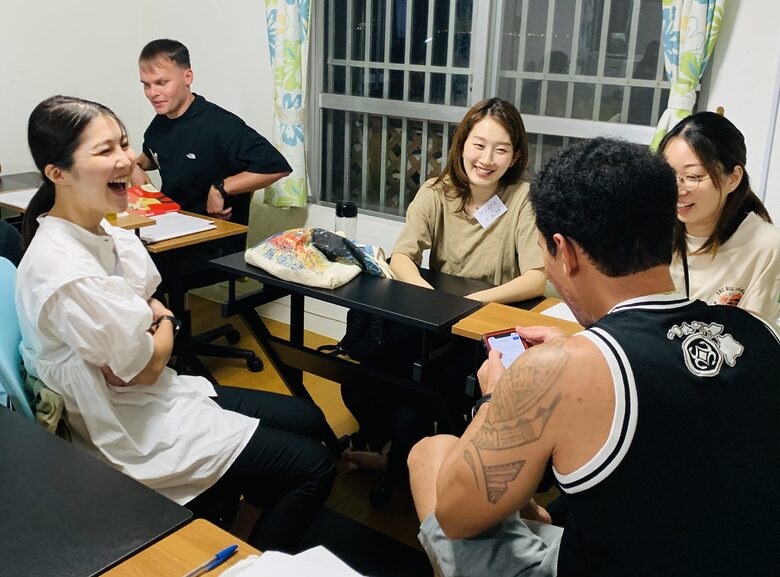
You may understand the Japanese when you study it and still think, “I’m nervous about speaking in Japanese to locals…” when a real person is sitting in front of you. Language Exchange gives you a place to take that first small step: bring the Japanese you have been learning into a real conversation and try one question.

On This Page

Learn Japanese with Japanese Friends!
Blue House Okinawa
Japanese School

When the Japanese You Studied Gets a Real Answer

Maybe a question such as “What did you do this weekend?” felt easy enough when you practiced it. Then you sit down with another person, feel that little bit of nervousness again, and say it anyway.

This time, the answer does not come from a textbook, worksheet, or example sentence. Another person actually answers you.

The reply may be close to what you imagined, or it may be something you never expected. Either way, the Japanese you studied has already done something different: it helped you ask a real person something you wanted to know.

And for a moment, you realize something simple but important: your Japanese was not perfect, but they understood what you were trying to say.

You do not need to arrive ready to talk about anything and everything. Before you start, you can decide what you would actually like to ask.

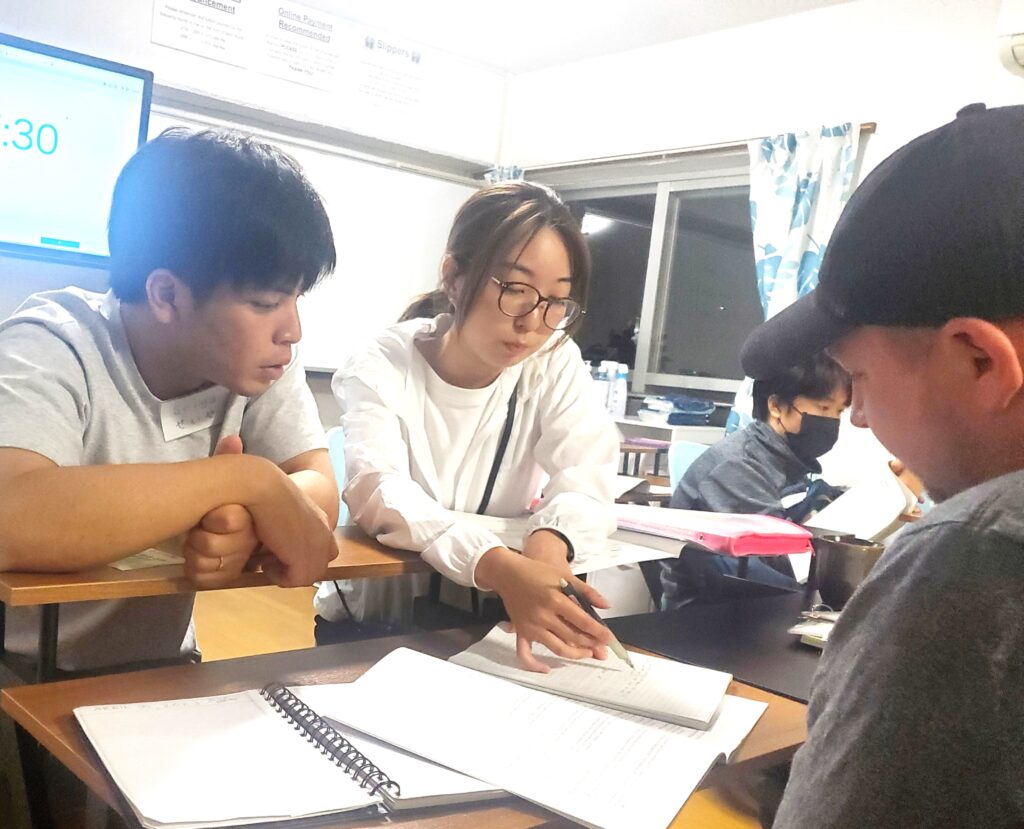
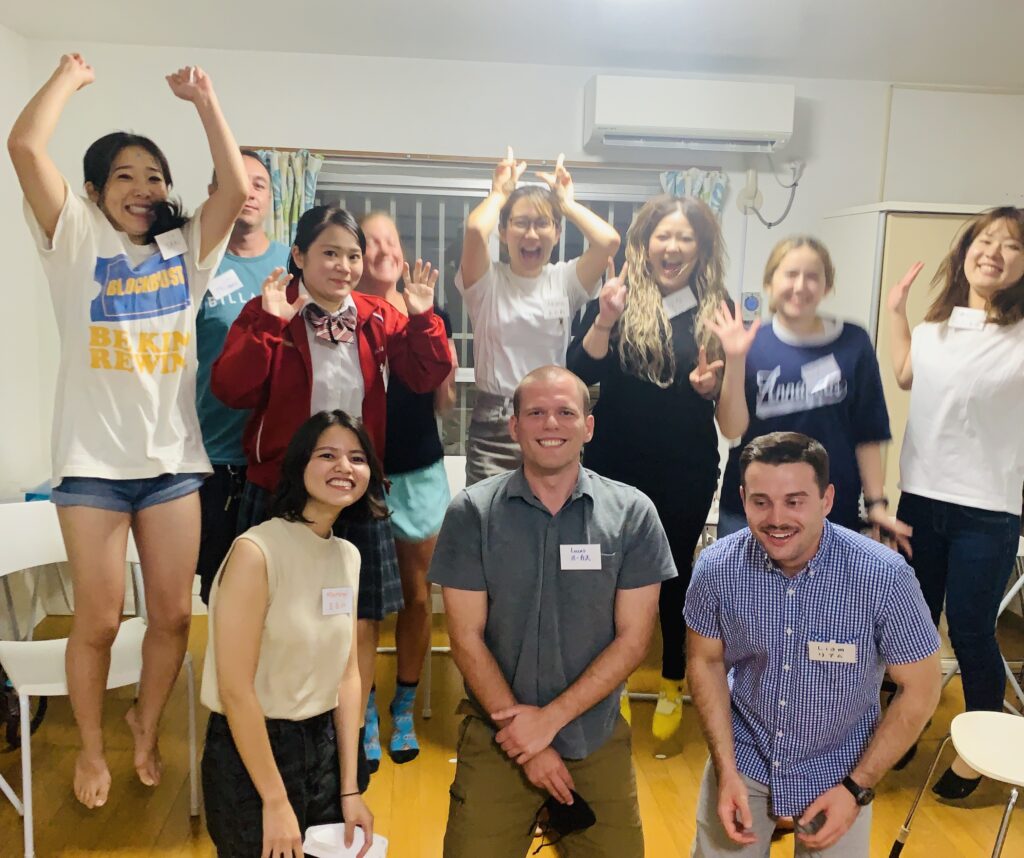
See how our in-class Language Exchange started
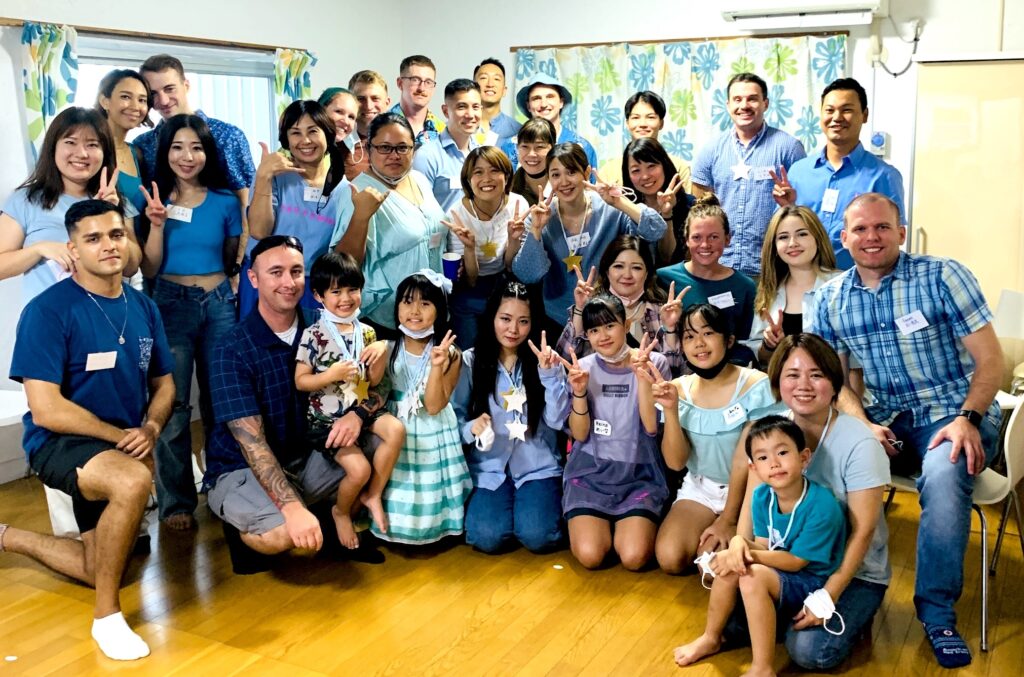
Blue House Okinawa Japanese School

Prepare Something You Really Want to Talk About

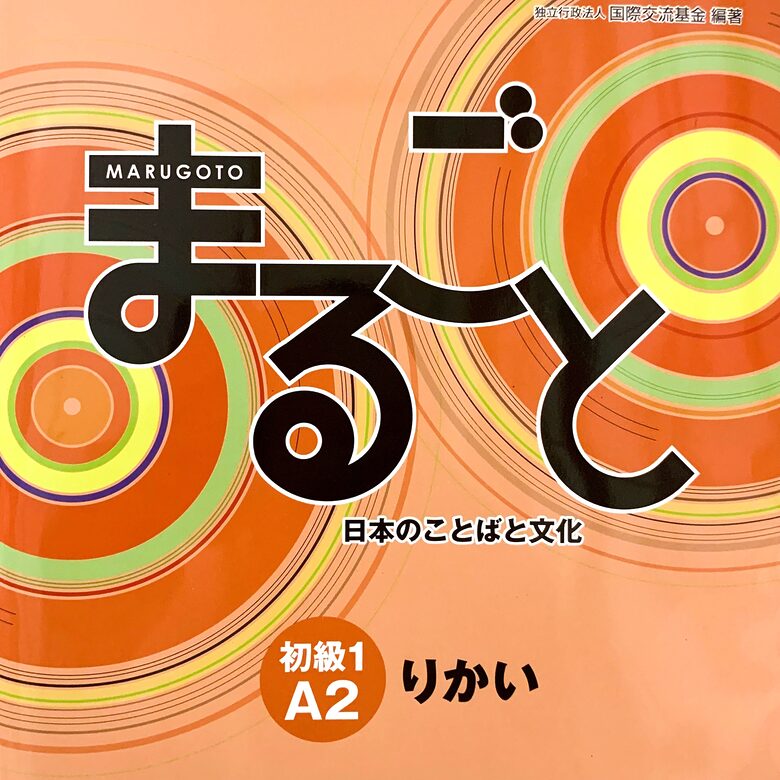
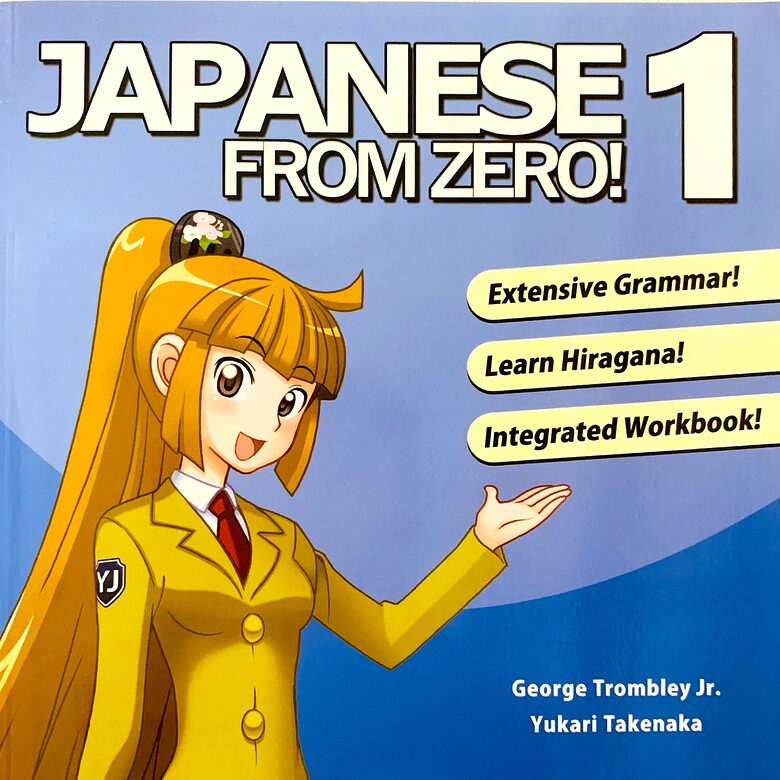
The Workbook and the Japanese you are already studying can help you prepare questions and answers about your own life. Instead of stopping with a model sentence from a lesson, you can turn the same grammar and vocabulary into something you would genuinely like to say or ask.

Your notes do not need to be complicated. You might prepare a few questions about someone’s weekend, food they like, a place they have visited, or something happening in Okinawa, along with a little Japanese about yourself in case the same question comes back to you.

What you prepare gives you something specific to ask about and something meaningful to practice. You are not being asked to walk into the room and invent an entire conversation from nothing.

You can prepare what you want to ask. What you cannot prepare is every answer you are going to hear.

If You Miss Something, Ask Again

You ask your question, and the answer comes back a little faster than you expected. Maybe there is a word you have never heard before, or the other person answers in a completely different way from the example you practiced.

You may understand the whole answer, but you may also catch only part of it.

Slow down, pick out what you know, and start from there. Listen to the answer, and if you miss something, ask again: “Mou ichido itte kudasai.”

The other person says it again, and this time you may catch one more familiar word or finally understand what they were trying to tell you. You do not have to understand every word for the conversation to continue; sometimes understanding a little more the second time is enough to keep going.

And after someone helps you with your Japanese, the exchange can turn the other way. The other person is learning too.

Get Help — Then Help Someone Else

Language Exchange is student-driven and designed to be a mutually beneficial learning experience.

You can use the Japanese you prepared with another learner, then help them with the language they are learning too.

Maybe the other person repeated a Japanese sentence more slowly, helped you understand an expression, or showed you another way to say what you meant. When the language changes, you have a chance to help them too — asking questions, sharing cultural insights, and giving each other feedback as the conversation moves back and forth.

Both people are learning. Both people have something to give.

And sometimes, once you stop concentrating only on getting the language right, you begin noticing the person behind the language too. A question about food can turn into hearing about someone’s family; a question about the weekend can lead to a place you have never visited.

The conversation becomes more than practice for a moment. You are learning a little more about another person’s experiences, culture, and point of view.

And the Japanese you used here did not begin here. You brought it with you from your study and class.
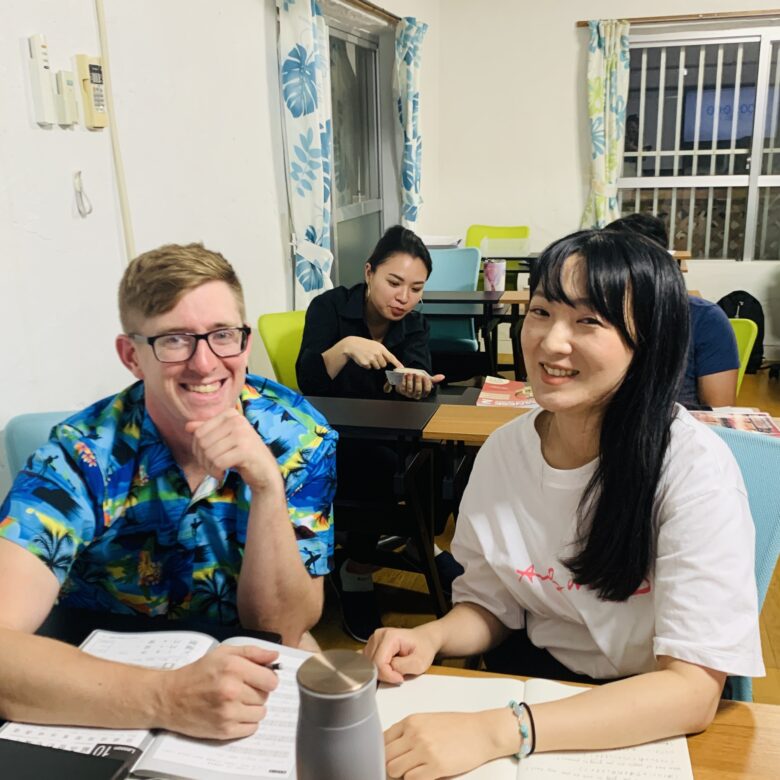
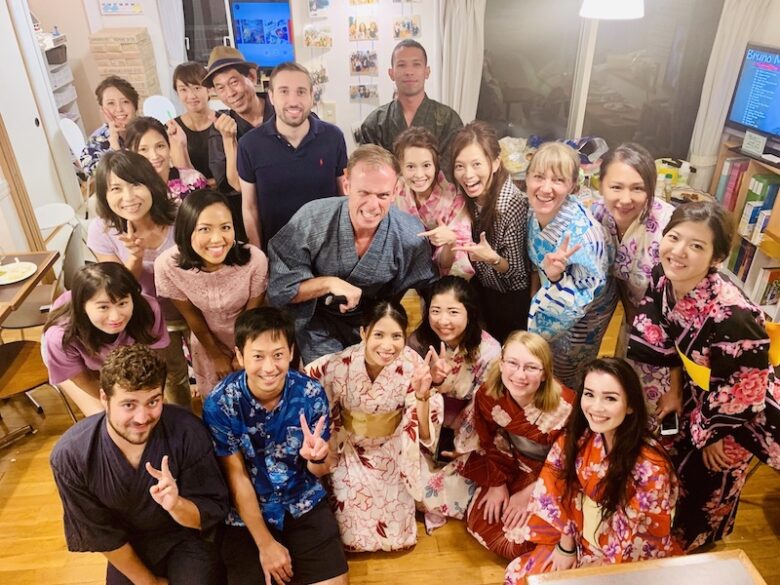
Blue House Okinawa Japanese /English School Language Exchange 5

What You Prepare and Practice Can Continue into Language Exchange

Textbook → Study Room → Workbook → Class → Language Exchange

The question you just used may have started with something you learned in your textbook, reviewed in the Study Room, connected to your own life in the Workbook, and checked or practiced in class.

Language Exchange is where that same Japanese can leave the learning materials and meet another person.

Then the conversation gives you something new to bring back. You may hear a new word, discover that you need more listening practice, think of another question you want to ask next time, or simply realize that you would like to know a little more about the person you were talking with.

The conversation gives you something new to learn, and the cycle begins again.

This is one part of the larger way Japanese moves from study into actual use at Blue House.

Every Language Exchange Can Be a Little Different

A real conversation can give you more than language practice. You may hear about another person’s experiences, compare something about life in Japan and another country, or discover a perspective you had never thought about before.

The people you practice with may change from one exchange to the next, so every conversation can be a little different.

Hear from a Student

I recommend Blue House Okinawa to anybody that wishes to learn Japanese. I learned that Japanese is difficult at Blue House Okinawa but students here are motivated to learn, Japanese people are kind and helpful. Blue House Okinawa is like a family where everyone is welcomed. 
Mr. Garion Hallmon

Garion’s review describes his own experience — arriving nervous, feeling welcomed, and getting to practice Japanese while other students practiced English. It is one student’s experience, so each Language Exchange may feel different depending on who is participating that day.

The people and pairings can change from one exchange to the next, and Language Exchange is not designed as a guaranteed one-on-one pairing or as a guarantee that a particular type of speaker will be present. What stays consistent is the opportunity to use the Japanese you have been building with the people who are there and see where a real conversation takes you.

So the next question is not who you will be paired with. It is what kind of Japanese you want to be able to bring into that conversation.
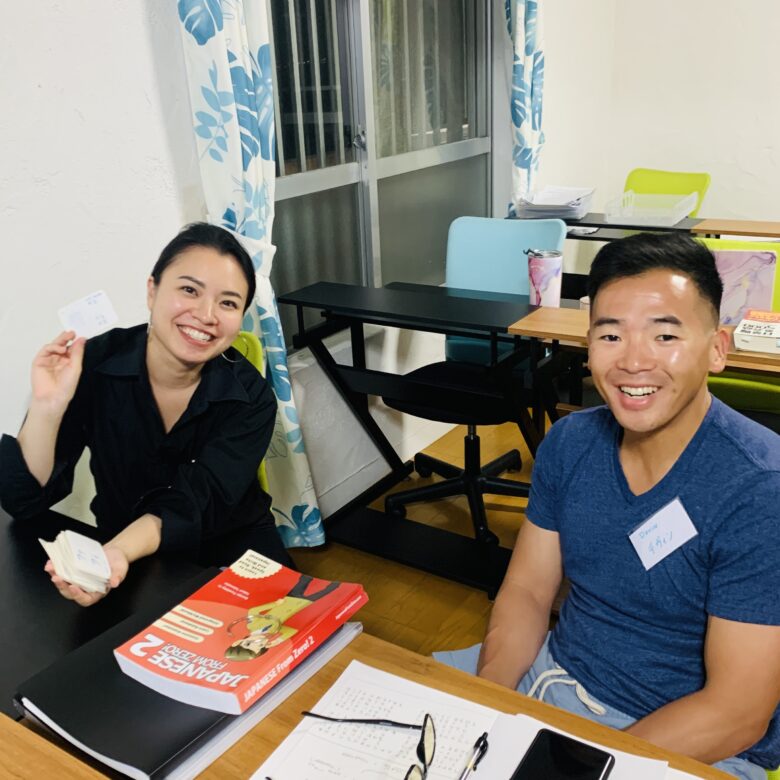
Blue House Okinawa Japanese /English School Language Exchange 3

Choose the Japanese You Want to Use

If you are starting Japanese from zero, you can begin by building the foundation. If you have studied before, you can find the course where Japanese starts to feel new again.

And if your main priority is practical speaking, Conversation Class gives you a different route focused more directly on communication.

You do not need to compare every class here. Choose the direction that fits what you want to be able to say, then find the Japanese class that can help you start building toward that conversation.

Focus mainly on practical speaking
Start Here: Conversation

Start Japanese from zero
Start Here: Beginners

Build beyond basic everyday Japanese
Start Here: Pre-Intermediate

Express more detailed ideas and experiences
Start Here: Intermediate

Prepare for JLPT N5, N4, or N3
Start Here: JLPT Test Prep

If practical speaking is your main priority:

If you want to compare the actual vocabulary, grammar, and examples across Blue House courses:

Ready to Start Using Your Japanese?

You do not need to wait until your Japanese feels perfect. Start by learning something you want to say, prepare it, practice it, and then give it a chance to become a real conversation.

If you already know which Japanese course you want, you can continue to the class options and choose how you want to learn.

If you would rather visit Blue House and ask questions before deciding, you can start with a Trial Lesson.

A Trial Lesson is optional. Direct enrollment is also available.
Japanese Conversation Class

Japanese Conversation Class at Blue House Okinawa

Speak Enough Japanese for Everyday Life in Okinawa

Learn the Japanese You Actually Need for Restaurants, Shopping, Transportation, and Simple Conversations

Want to speak more Japanese without adding homework to an already busy week?

Conversation Class is a relaxed, interactive way to learn practical Japanese you can actually use in Okinawa.

There is no required homework or pre-study. Come to class, learn together, practice the sounds, and start speaking.

Schedule

Monday 6:20–7:30 PM & Wednesday 8:10–9:20 PM
2 lessons per week · 2 months

Tuition

¥55,400 by the 20th
¥66,500 after the 20th
Registration Fee: ¥11,000
Conversation Class Materials: ¥7,200

First Payment

By the 20th: ¥73,600
After the 20th: ¥84,700

On This Page

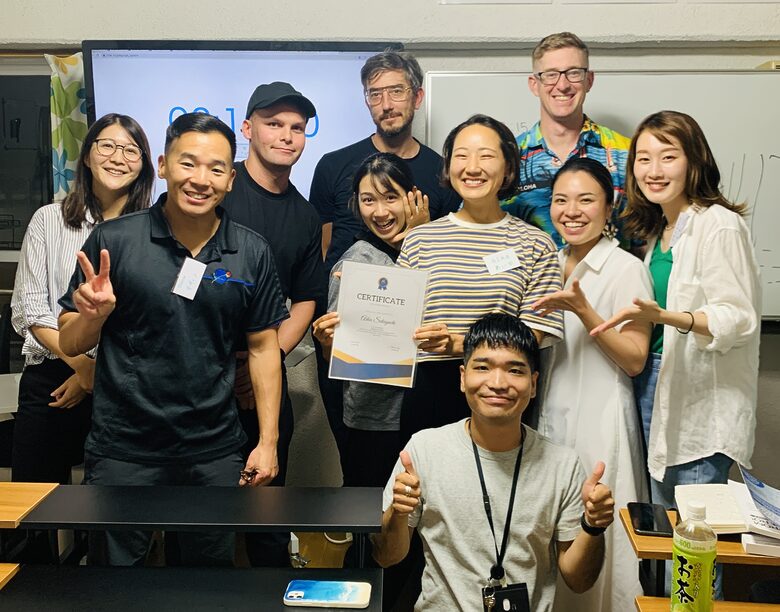
Blue House Okinawa In-Class Language Exchange Feb '24 - 3

Japanese That Fits Into Your Life

You do not need to turn Japanese into another big commitment.

Conversation Class gives you a place to keep learning and speaking, even when work, family, or everyday life makes it hard to study at home.

There is no required homework or pre-study before class.

Just come in and learn with us.

Learn Japanese You Can Actually Use

The class focuses on Japanese for situations you can imagine yourself in.

You might practice ordering at a restaurant, understanding what someone asks you at a convenience store, asking about business hours, shopping, using transportation, or talking about your day.

The Conversation Class materials include practical Japanese for situations you may actually experience while living in or traveling around Japan.

Hear It. Say It. Use It.

Conversation is not only about knowing what the words mean.

You also work on pronunciation and everyday expressions, so Japanese becomes something you can hear, say out loud, and begin using with other people.

Japanese for Everyday Situations

Conversation Class includes topics such as:

  • Greetings
  • Self-introduction
  • Countries, people, and languages
  • Occupations
  • Giving directions to a taxi driver
  • Places
  • Counting in yen
  • Ordering at a coffee shop
  • Ordering pizza on the phone
  • Convenience store phrases
  • Counting objects
  • Ordering at a restaurant
  • Avoiding ingredients and explaining allergies
  • Restaurant signs and Kanji
  • Shopping
  • Food and ingredients
  • Telling time
  • Asking about business hours
  • Days and dates
  • Public transportation
  • Locations
  • Station phrases
  • Everyday expressions

You Don’t Have to Know What to Talk About

Some people hear “conversation class” and imagine walking into a room and being told:

“Okay, talk.”

That is not how this class works.

The lesson already gives you a situation and Japanese to work with, so you do not need to prepare a topic or invent a conversation before you arrive.

You can simply listen, practice, and give Japanese a try.

Take Japanese Out Into Okinawa

Something you practice in class may suddenly show up again in everyday life.

A phrase from class may sound familiar at a restaurant. You might recognize a question at a store, understand a little more of what someone says, or realize that you already know how to ask for something you need.

Those small moments are part of what makes learning Japanese in Okinawa fun.

Japanese starts feeling less like something you only study and more like something that is becoming part of your life here.

Blue House Okinawa Aug 30th-10 (2) copy

More Than a Japanese Class

Class may end for the day, but the people, conversations, and reasons to keep using Japanese don’t always have to end there.

The connection doesn’t have to disappear when the lesson ends.

Sometimes it’s simply useful language practice. Sometimes a conversation leads to studying together, learning something about another person, or becoming happy to see someone again.

Japanese can start connecting not only to what you study, but also to the people you meet and the experiences you have while living in Okinawa.

See What Conversation Class Feels Like

You do not have to imagine what the class is like.

You can see the materials, the classroom, and the people who have actually taken Conversation Class.

See the Class Materials

JP Class Conversation Class Materials

See The Class

Blue House Okinawa Japanese /English School Language Exchange 3

Hear from Conversation Class Students

Liam and Grace have shared their experience with Japanese Conversation Class, Blue House Okinawa, and living in Okinawa.

What Another Student Says

“If you are looking for a language school that encompasses textbook learning along with practical use this is the place. The language exchange promotes practice and confidence! Wonderful teachers and always willing to work with your schedule.”

— Mackenzie Antley, Google Review, April 7, 2021

Choose How You Want to Take Conversation 1

Conversation 1 is available through Lecture or Intensive-Lecture.

Then choose whether you want a Fixed Schedule or Flex.

Lecture

Prefer a regular class rhythm?

Conversation 1 Lecture runs twice a week for two months with your instructor and classmates.

Schedule

Monday 6:20–7:30 PM &Wednesday 8:10–9:20 PM
Duration: 2 months
Frequency: 2 lessons per week

Conversation 1 Lecture Schedule

1 Mar – 29 Apr, 2027
5 Jul – 26 Aug, 2027
1 Nov – 23 Dec, 2027

Total Tuition

Tuition:
¥55,400 by the 20th
¥66,500 after the 20th

Registration Fee:
¥11,000

Conversation Class Materials:
¥7,200

First Payment Total

By the 20th: ¥73,600
After the 20th: ¥84,700

Intensive-Lecture

Want to focus on practical Japanese for a shorter period?

Intensive Conversation 1 runs four days a week for one month.

Schedule

Monday–Thursday 3:10–4:20 PM
Duration: 1 month
Frequency: 4 lessons per week

Intensive Conversation 1 Schedule

2 Nov – 26 Nov, 2026
1 Feb – 25 Feb, 2027
5 Apr – 29 Apr, 2027
31 May – 24 Jun, 2027
2 Aug – 26 Aug, 2027
4 Oct – 28 Oct, 2027
29 Nov – 23 Dec, 2027

Total Tuition

Tuition:
¥55,400 by the 20th
¥66,500 after the 20th

Registration Fee:
¥11,000

Conversation Class Materials:
¥7,200

First Payment Total

By the 20th: ¥73,600
After the 20th: ¥84,700

Flex

Choose Flex if you want more control over when and how often you come.

With Flex, you choose the number of lessons you want, then book from the Japanese classes available on the weekly schedule.

You can join Conversation classes when they are available, mix them with other Japanese classes, study at a relaxed pace, or use a larger Flex plan to create a more intensive schedule.

Flex

Book available Conversation lessons from the current weekly Japanese schedule.

Registration Fee:
¥11,000

Conversation Class Materials:
¥7,200

Want to Give Japanese a Try?

You do not have to be serious about mastering Japanese before you start enjoying it.

Conversation Class gives you a place to hear Japanese, say it, laugh, make mistakes, try again, and enjoy using a little more of the language around you.

Come to class and give it a try.

Not sure yet?

Intermediate Japanese Class

Intermediate Japanese Class at Blue House Okinawa

Say More Than What Happened

Explain What Happened, How You Felt, and Why It Matters

You can already communicate in Japanese.

Now you want to explain more — what happened, how you felt, why you think something, and what you want the other person to understand.

Intermediate helps you build the grammar, vocabulary, and sentence connections you need for longer, more detailed conversations.

Schedule

Tuesday & Thursday
— choose
1:15–2:25 PM,
6:20–7:30 PM,
or 8:10–9:20 PM
2 lessons per week · 1 month

Tuition

¥27,700 by the 20th
¥33,900 after the 20th
Registration Fee: ¥11,000
Intermediate Materials: ¥9,240

First Payment

By the 20th: ¥47,940
After the 20th: ¥54,140

On This Page

Move Beyond Simple Answers

At this level, the challenge is often not making one correct sentence.

It is connecting several thoughts together.

You may want to tell someone about a trip, explain why you made a decision, describe something that happened at work, compare two things, or share your opinion.

Intermediate gives you more ways to organize those ideas and express them in Japanese.

Is Intermediate the Right Level for You?

You do not have to guess which level comes next.

If you have studied Japanese before, take the online level check to see where your current Japanese fits.

Pre-Intermediate

Build longer everyday answers and learn to keep conversations going.

Intermediate

Explain experiences, reasons, opinions, comparisons, and more detailed ideas using stronger grammar and vocabulary.

JLPT

Choose JLPT Test Prep if your main goal is preparing specifically for the Japanese Language Proficiency Test.

See What You’ll Learn in Intermediate

Intermediate is divided into three stages.

If you have studied Japanese before, compare the topics, grammar, and examples below with what you already understand and use.

The goal is not only to learn more grammar.

As you move through Intermediate, you gain more ways to describe situations, explain reasons, compare choices, talk about experiences, and connect your ideas in greater detail.

Intermediate 1 expands the ways you can describe people, food, travel, experiences, and everyday situations.

You’ll practice 〜そうです for describing how something appears, 〜ので for giving reasons, and 〜たほうがいい / 〜ないほうがいい for giving advice.

You’ll also work with expressions such as 〜てから / 〜ないで, potential forms such as 〜られます, and 〜し〜し for connecting multiple reasons or characteristics.

Examples

彼女はやさしそうな人ですね。
She seems like a kind person.

私はアレルギーがあるので、えびとかにが食べられません。
I have allergies, so I can’t eat shrimp or crab.

ダイビングのどうぐは借りたほうがいいですか。
Is it better to rent diving equipment?

Intermediate 2 gives you more ways to talk about experiences, wishes, plans, work, events, shopping, and choices.

You’ll practice 〜たら for conditions, potential expressions such as 〜られます, and comparisons using 〜より〜のほうが.

You’ll also work with もう / まだ, 〜てしまいました, 〜にくい / 〜やすい, and 〜しか〜ません so you can describe limitations, completed actions, and how easy or difficult something is to do.

Examples

日本まつりのボランティアをしたいと思っています。
I’m thinking about volunteering at the Japan festival.

今年は休みが4日間しかなかったので、旅行には行きませんでした。
I only had four days off this year, so I didn’t go on a trip.

中が広くて、食べ物をとりだしやすいし、そうじもしやすいし、買ってよかったです。
It’s spacious inside, food is easy to take out, and it’s easy to clean, so I’m glad I bought it.

Intermediate 3 expands into topics such as history, culture, the environment, habits, changes, and personal experiences.

You’ll practice 〜ても and 〜ために, as well as expressions such as 〜ようにしています / 〜ないようにしています for talking about habits and things you make an effort to do or avoid.

You’ll also work with 〜てあります / 〜たまま, 〜かもしれません, and 〜ようになりました / 〜なくなりました for describing situations, possibilities, and changes over time.

Examples

日本の文化をもっと知るために、毎月10日と25日にセミナーがあります。
There are seminars on the 10th and 25th of every month to learn more about Japanese culture.

私はごみをへらすために、できるだけスーパーのふくろをもらわないようにしています。
To reduce waste, I try not to take plastic bags from the supermarket whenever possible.

大きい自転車を買ったので、小さいのがいらなくなりました。
I bought a larger bicycle, so I no longer need the smaller one.

Which Intermediate Level Feels Closest to You?

Intermediate 1 may be a useful starting point if expressions such as 〜そうです, 〜ので, 〜たほうがいい, or 〜し〜し still feel new.

Intermediate 2 may be closer if those feel comfortable but 〜たら, 〜てしまいました, 〜にくい / 〜やすい, or 〜しか〜ません are less familiar.

Intermediate 3 may be the better comparison when the earlier material feels comfortable but 〜ために, 〜ようにしています, 〜てあります, 〜かもしれません, or expressions for changes over time still need practice.

Already comfortable with most of these?

You may want to compare your goals with JLPT Test Prep or another Japanese class option.

Prepare Japanese About Your Own Life

Your learning continues between classes.

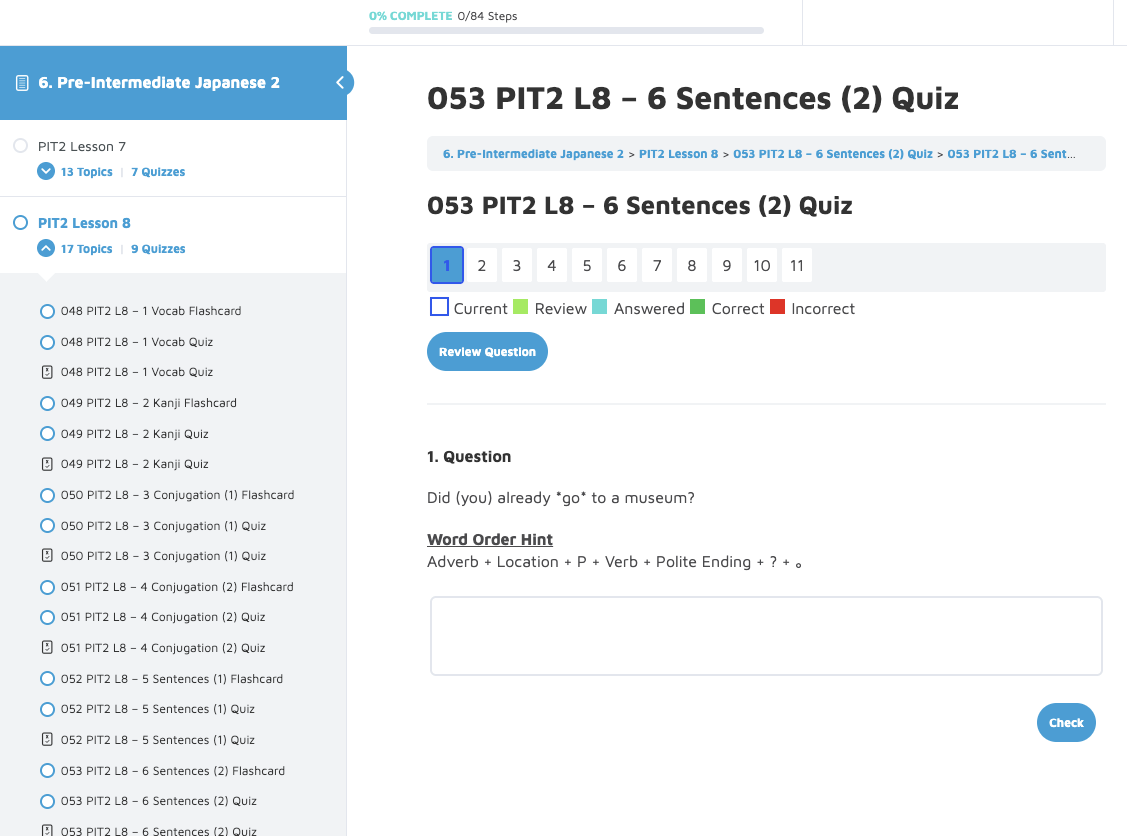
Study Room and Workbook activities give you time to work with new grammar and vocabulary before you use it in conversation.

You can connect what you are learning to your own experiences, opinions, plans, and everyday life.

That way, the Japanese you bring into class already has a reason to matter to you.

JP Class Study Room Quizzes

Check How You Want to Say It

In class, bring in what you studied and the parts you were not sure about.

You can check grammar, vocabulary, sentence connections, and pronunciation with your teacher, then practice saying your ideas out loud.

Sometimes the Japanese may be technically understandable but not quite express what you wanted to say.

Class gives you a place to notice that difference, adjust it, and try again.

The goal is not just a correct sentence. It is expressing what you actually mean.

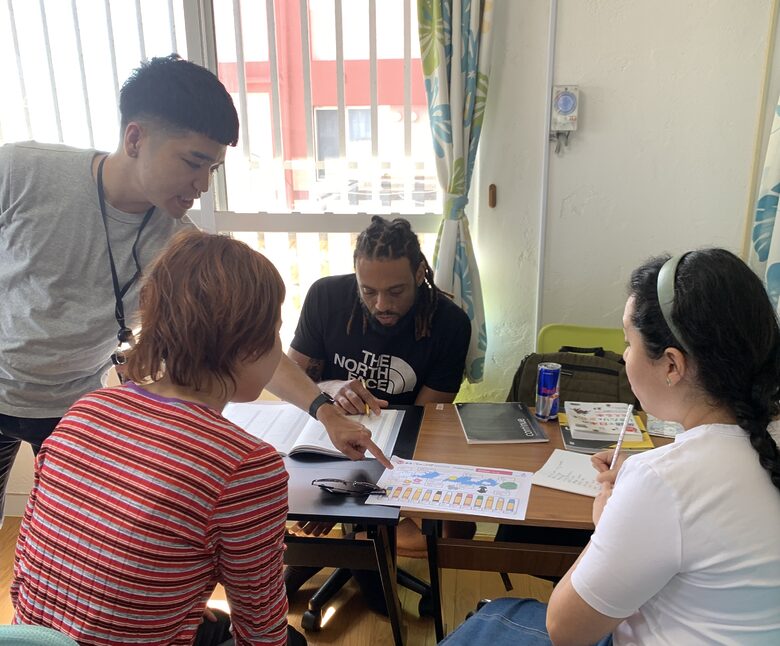
Blue House Okinawa In-Class Language Exchange Feb '24 - 2

Use More of Your Japanese in Real Conversations

Once you have practiced how to express an idea, take it into a real conversation.

Language Exchange gives you a chance to use your Japanese with Japanese students who are learning English too.

A real conversation may go in a direction you did not expect.

Someone may ask a follow-up question. You may need to explain something another way. You may hear a word you have never heard before.

Those moments give you a reason to use more of the Japanese you have been building.

More Than a Japanese Class

Class may end for the day, but the people, conversations, and reasons to keep using Japanese don’t always have to end there.

The connection doesn’t have to disappear when the lesson ends.

Sometimes it’s simply useful language practice. Sometimes a conversation leads to studying together, learning something about another person, or becoming happy to see someone again.

Japanese can start connecting not only to what you study, but also to the people you meet and the experiences you have while living in Okinawa.

See What Intermediate Study Looks Like

At Intermediate level, it can be difficult to understand what a class is really like from a course description alone.

Seeing the actual materials and classroom makes the next step much easier to picture.

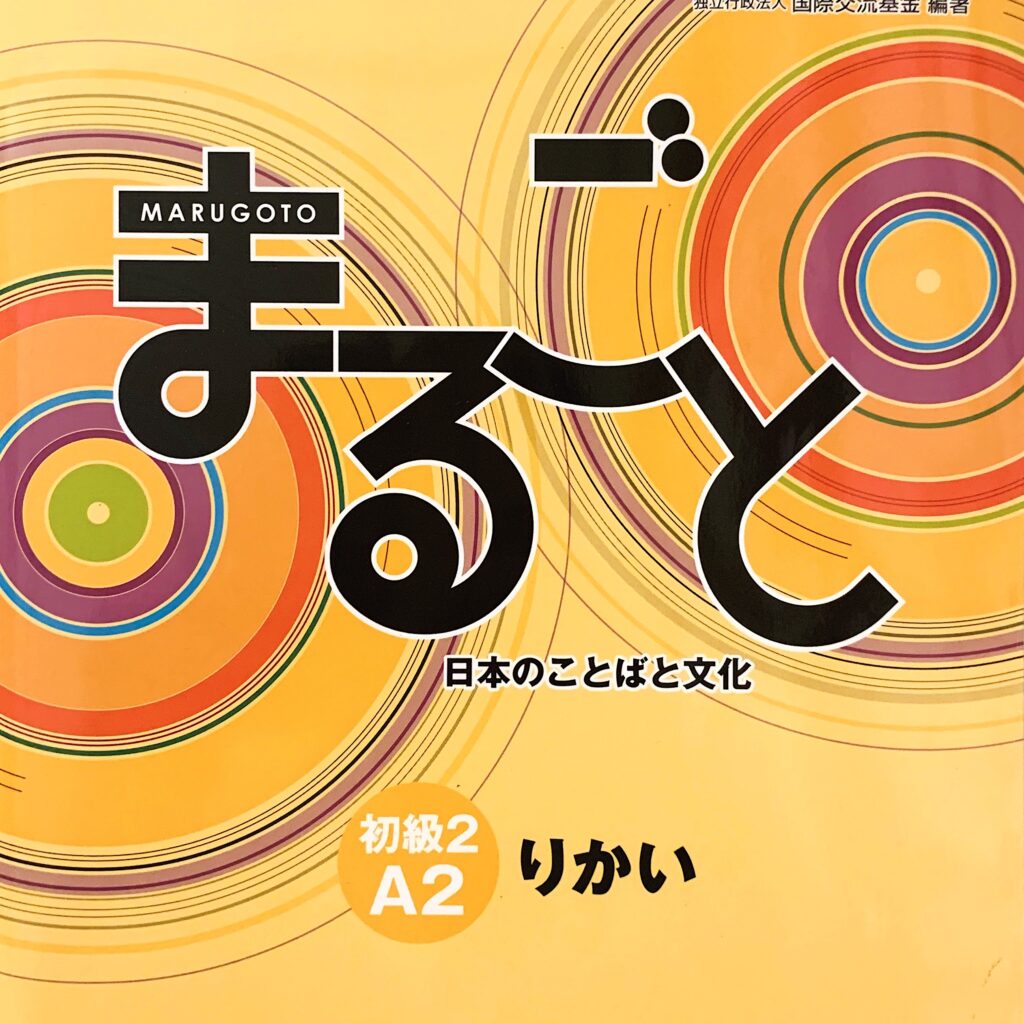
See the Materials

intermediate-japanese-class-textbook

See the Class

Blue House Okinawa Japanese / English School - Language Exchange in 8

Hear from Students

“Blue House Okinawa is a welcoming and fun language and cultural community! The teachers are fantastic and everyone is there for love of learning. The opportunity for native English and Japanese speakers to exchange knowledge and share the learning experience combined with social and educational cultural gatherings can’t be found anywhere else! The small class sizes make sure you feel comfortable asking questions and get a tailored approach to learning. The books, videos, and in class teaching time reinforce the concepts. And the in class exchange ensures you get practice speaking, not just reading and listening!”

— Ms. Stefanie Purdie

Choose How You Want to Take Intermediate

Intermediate is offered through Self-Paced.

That means you move through the Intermediate curriculum according to your own progress while still receiving instructor support in class.

Then choose how you want Japanese to fit into your week.

Fixed Schedule

Choose Fixed if you want the same scheduled class days and times each week.

A regular schedule gives you a consistent routine while you continue through the Intermediate curriculum at your own pace.

Schedule

Choose one:

  • Tuesday & Thursday 1:15–2:25 PM
  • Tuesday & Thursday 6:20–7:30 PM
  • Tuesday & Thursday 8:10–9:20 PM

Frequency: 2 lessons per week

Tuition

¥27,700 by the 20th
¥33,900 after the 20th

Registration Fee:
¥11,000

Intermediate Materials:
¥9,240

First Payment Total

By the 20th: ¥47,940
After the 20th: ¥54,140

Flex

Choose Flex if you want more control over when and how often you come.

With Flex, you choose the number of lessons you want, then book from the Japanese classes available on the weekly schedule.

You can use Flex for a lighter pace, such as one lesson a week, or choose a larger Flex plan and build a more intensive schedule.

Flex

Book available Japanese lessons from the current weekly schedule.

Registration Fee:
¥11,000

Intermediate Materials:
¥9,240

Not Sure What to Study Next?

If you can already handle everyday Japanese but still feel limited when you want to explain more, Intermediate may be the next step.

If you are still working on making everyday conversations longer, Pre-Intermediate may fit better.

If your main goal is practical speaking without following the full reading, writing, and grammar path, Conversation Class is another option.

If you are preparing specifically for the Japanese Language Proficiency Test, JLPT Test Prep follows a different path.

You can take the online level check if you are not sure where your current Japanese fits.

Still Have a Practical Question Before You Start?

If you know which course you want but still have a question about finding Blue House, parking, class schedules, or what to do before you arrive, you do not need to search through the other pages one by one.

Not sure which level is right for you?

Pre-Intermediate Japanese Class

Pre-Intermediate Japanese Class at Blue House Okinawa

Say More. Respond More. Keep the Conversation Going.

Build on the Japanese You Already Know

You already know some Japanese. Now you want to say a little more.

Pre-Intermediate helps you move beyond short answers and talk more about your family, hobbies, food, travel, work, and everyday life.

You’ll keep building your vocabulary and grammar while learning how to connect what you already know into longer, more useful conversations.

Schedule

Tuesday & Thursday
— choose
1:15–2:25 PM,
6:20–7:30 PM,
or 8:10–9:20 PM
2 lessons per week · 1 month

Tuition

¥27,700 by the 20th
¥33,900 after the 20th
Registration Fee: ¥11,000
Pre-Intermediate Materials: ¥9,240

First Payment

By the 20th: ¥47,940
After the 20th: ¥54,140

On This Page

Blue House Okinawa In-Class Language Exchange Feb '24 - 3

When One-Word Answers Are Not Enough

Maybe you can already understand a simple question in Japanese.

Someone asks what food you like, what you did over the weekend, where you went, or what you do for work.

You know how to answer — but the conversation stops after one short sentence.

Pre-Intermediate helps you take the Japanese you already know and add more to it.

Instead of only answering the question, you begin learning how to explain, add details, respond, and keep the conversation moving.

Beginners, Pre-Intermediate, or Intermediate?

You do not have to start over just because you are new to Blue House.

If you already know basic Japanese, take the online level check to see where your current Japanese fits.

Beginners

Build the foundation: basic sentence patterns, vocabulary, Hiragana, Katakana, and essential grammar.

Pre-Intermediate

Build on that foundation and begin using more vocabulary, grammar, and connected sentences to talk about everyday topics.

Intermediate

Move beyond everyday answers and learn to explain your experiences, thoughts, reasons, and opinions in more detail.

See What You’ll Learn in Pre-Intermediate

Pre-Intermediate is divided into three stages.

Students who have studied Japanese before can compare the grammar, topics, and examples below with what they already understand and use.

You’ll expand your vocabulary and Kanji while talking about familiar topics such as family and relatives, hobbies, nature, seasons, weather, and your town.

You’ll practice 〜ている for ongoing actions or states, 〜とき for talking about when something happens, and なる for expressing changes.

You’ll also practice connecting verbs and adjectives so you can make longer descriptions and talk about familiar situations in more detail.

Examples

ひまなとき、こうえんで えをかきます。
In my free time, I draw pictures at the park.

今、雪がふっています。
It’s snowing now.

とてもにぎやかでたのしいです。
It’s very lively and fun.

Next, you’ll practice everyday situations such as meeting friends, making plans, going out, talking about meals, and sharing language-learning and cultural experiences.

You’ll work with 〜てもいいですか for checking whether something is okay, 〜たいです for saying what you want to do, and 〜てみます for trying something.

Expressions such as 〜のまえに / 〜のあとで, もう / まだ, 〜に行きます / 〜に来ます, and comparisons such as どちらがいいですか help you talk about plans, timing, purpose, and choices.

Examples

やけいのあとで飲みに行きませんか。
Would you like to go for a drink after seeing the night view?

私はおいしいものを食べに行きたいです。
I want to go eat something delicious.

私は大学のとき、ドイツ語を勉強しました。
I studied German when I was in college.

At this stage, the range of situations becomes wider, including business trips, the workplace, health and exercise, celebrations, and feelings.

You’ll practice 〜たことがあります for experiences, 〜すぎます for saying something is too much, and expressions such as 〜るといいです, 〜ないでください, and 〜たり〜たりしています.

You’ll also work with 〜と思います, 〜と言っていました, and giving and receiving expressions such as あげます / もらいます.

Examples

日本で会ったことがあります。
I have met them in Japan before.

お酒は飲みすぎないでください。
Please don’t drink too much alcohol.

よしださんはよく花をかざると言っていました。
Yoshida-san said that she often decorates with flowers.

Which Level Feels Closest to You?

Pre-Intermediate 1 may be a useful starting point when 〜ている, 〜とき, and なる still feel new.

Pre-Intermediate 2 may be closer when those feel comfortable but expressions such as 〜たいです, 〜てみます, もう / まだ, or before-and-after expressions are less familiar.

Pre-Intermediate 3 may be the better comparison when the earlier material feels comfortable but 〜たことがあります, 〜すぎます, 〜と思います, 〜と言っていました, or giving and receiving expressions still need practice.

Already comfortable with most of these? Compare the Intermediate class.

Prepare What You Want to Talk About

Your learning continues between classes.

Study Room and Workbook activities help you review what you are learning and connect it to things you may actually want to talk about.

Instead of stopping with a model sentence from the textbook, you begin connecting the Japanese to your own life — your family, your interests, places you have been, things you have done, and what you think.

That gives you something meaningful to bring back into class.

JP Class Study Room Quizzes

Use Class Time to Check, Practice, and Speak

Bring what you studied at home into class.

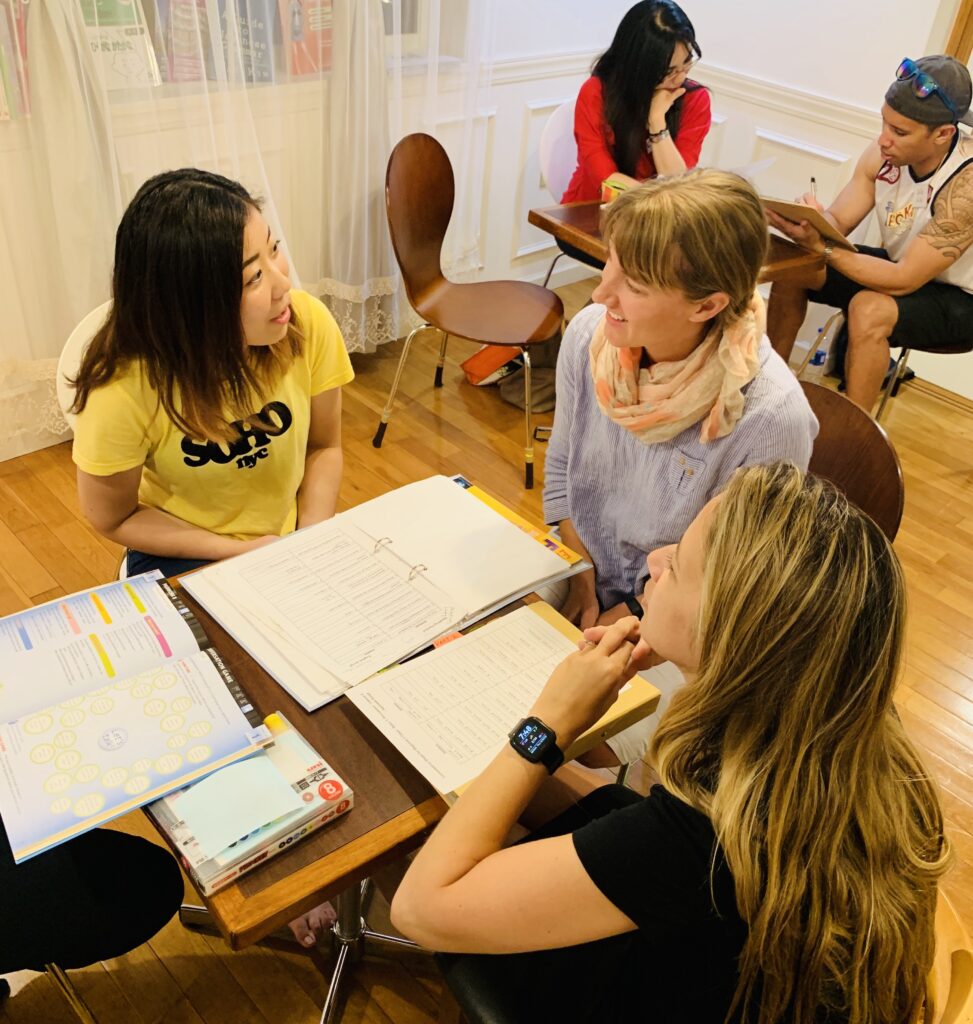
You can ask questions, check grammar and vocabulary, work on pronunciation, and practice saying what you prepared out loud.

If something does not sound right, your teacher can help you find the problem and try it again.

The goal is not simply to complete the study materials.

The goal is to turn what you studied into Japanese you can actually say.

Take What You Practiced into a Real Conversation

Once you have studied something, checked it, and practiced saying it, the next step is to use it with another person.

Language Exchange gives you a chance to use the Japanese you are learning with Japanese students who are learning English too.

You may not understand every word of the answer you hear.

That is okay.

Listen for the Japanese you recognize, ask again when you need to, and see how far the conversation goes.

Ask a question. Listen to the answer. If you miss something, ask again.

Each real conversation can show you what you already know — and what you want to learn next.

Blue House Okinawa Jan'23-Making Friends

More Than a Japanese Class

Class may end for the day, but the people, conversations, and reasons to keep using Japanese don’t always have to end there.

The connection doesn’t have to disappear when the lesson ends.

Sometimes it’s simply useful language practice. Sometimes a conversation leads to studying together, learning something about another person, or becoming happy to see someone again.

Japanese can start connecting not only to what you study, but also to the people you meet and the experiences you have while living in Okinawa.

See What Pre-Intermediate Study Looks Like

Reading about a class is one thing.

Seeing what students actually study and do gives you a clearer idea of what Pre-Intermediate looks like at Blue House Okinawa.

See the Materials

pre-intermediate-japanese-class-textbook

See the Class

Blue House Okinawa Japanese /English School Language Exchange 5

Hear from Students

Mr. Tom Nelson

I had spent about 8 months using online based methods to learn Japanese.
Blue House Okinawa gave me the opportunity to learn Japanese face-to-face with native Japanese speakers.
The language exchanges forced me to step outside of my shell and speak among our Japanese peers, which was exactly what I needed to do to gain confidence to apply my classroom learning to the real world. Most importantly, it has been an incredibly fun experience to learn Japanese while helping others to learn English!

What Connor san & Noah san from our Japanese self-paced class have to say about:
– Blue House Okinawa
– Why They Started Learning Japanese
– How They Study Japanese
– Tips for Learning Japanese

Choose How You Want to Take Pre-Intermediate

Pre-Intermediate is offered through Self-Paced.

That means you move through the Pre-Intermediate curriculum according to your own progress while still receiving instructor support in class.

Then choose how you want Japanese to fit into your week.

Fixed Schedule

Choose Fixed if you want the same scheduled class days and times each week.

A regular schedule gives you a consistent routine while you continue through the Pre-Intermediate curriculum at your own pace.

Schedule

Tuesday & Thursday
Choose:

  • 1:15–2:25 PM
  • 6:20–7:30 PM
  • 8:10–9:20 PM

Frequency: 2 lessons per week
Duration: 1 month

Total Tuition

Tuition:
¥27,700 by the 20th
¥33,900 after the 20th

Registration Fee:
¥11,000

Pre-Intermediate Materials:¥9,240

First Payment Total

By the 20th: ¥47,940
After the 20th: ¥54,140

Flex

Choose Flex if you want more control over when and how often you come.

With Flex, you choose the number of lessons you want, then book from the Japanese classes available on the weekly schedule.

You can use Flex for a lighter pace, such as one lesson a week, or choose a larger Flex plan and build a more intensive schedule.

Flex 8

8 lessons

Tuition:
¥33,400

Registration Fee:
¥11,000

Pre-Intermediate Materials:
¥9,240

First Payment Total

¥53,640

Book from available Japanese lessons on the current weekly schedule.

For current booking, cancellation, and Flex plan details, see the Tuition & Schedule page.

Not Sure Which Direction to Take?

If you already know some Japanese but are unsure whether Pre-Intermediate is the right level, you do not have to guess.

Take the online level check and see what matches what you already know.

If your main goal is practical speaking without following the full reading, writing, and grammar path, Conversation Class is another option.

If you are ready to express experiences, reasons, and opinions in more detail, Intermediate may be the next step.

If you are preparing specifically for the Japanese Language Proficiency Test, you can also look at JLPT Test Prep.

Ready to Continue Your Japanese?

You have already started learning Japanese.

Pre-Intermediate helps you take that foundation and do more with it — say more, understand more, and keep a conversation going a little longer.

What you study at home comes into class.

What you practice in class can go into real conversations.

And little by little, the Japanese you already know becomes Japanese you can actually use.

Not sure which level is right for you?

Beginners Japanese Class

Beginner Japanese Class at Blue House Okinawa

Start Learning Japanese from Zero at Blue House Okinawa

Your First Japanese Class Can Be Fun, Too

You do not need to know Japanese before you begin.

Beginners 1 Class truly starts from zero, so you can learn the basics in order without wondering what you are supposed to know already.

You’ll begin with pronunciation, numbers, greetings, and simple Japanese — then keep building step by step.

This is where you start.

¥55,400 / 2 Months with Early Bird
¥66,500 / 2 Months with Regular

Registration Fee: ¥11,000
Beginners 1 & 2 Materials: ¥7,700

First Time Payment
By the 20th: ¥74,100
After the 20th: ¥85,200

On This Page

Blue House Okinawa Japanese School

Start with the Basics — Then See What You Can Do

Your first lessons begin with pronunciation, counting, greetings, and useful everyday expressions.

From there, you’ll start building simple sentences, adding vocabulary, and learning Hiragana little by little.

Japanese may look completely unfamiliar at first, but you do not have to learn everything at once.

You build it one step at a time.

Imagine Being Able to Say:

I’m Lisa.
Lisa to mōshimasu.

I like curry.
Karē ga suki desu.

Please say it again.
Mō ichido itte kudasai.

Please speak more slowly.
Motto yukkuri itte kudasai.

They are simple sentences, but they are the beginning of actually using Japanese.

Blue House Okinawa In-Class Language Exchange Feb '24 - 4

Choose the Way You Want to Start

If you are starting from zero, Beginners 1 is your first course.

Beginners 1 is available in three different ways:

  • Lecture
  • Intensive-Lecture
  • Self-Paced

Choose the one that fits how much time you have and how you want to learn.

Lecture

Want a regular schedule and a clear class rhythm?

Lecture meets twice a week for two months. You move through Beginners 1 together on a fixed schedule with your instructor and classmates.

Intensive-Lecture

Want to focus on Japanese for a shorter period of time?

Intensive-Lecture meets four times a week for one month, giving you a more concentrated way to complete Beginners 1.

Self-Paced

Prefer to move through the Beginners curriculum according to your own progress?

With Self-Paced, you work through structured Japanese course material at your own pace while still receiving instructor support in class.

After Beginners 1

Beginners 2, Beginners 3, and Beginners 4 are available through Self-Paced only.

After completing Beginners 1 — or if you already know the Beginners 1 material — you can continue through Beginners 2–4 at your own pace with instructor support.

This means you do not need to wait for a new Beginners group class before moving on to the next level.

Already Studied Japanese? See Where You Fit

Beginners 1 is the starting point for complete beginners.

If you have studied Japanese before, you may not need to start over.

Compare the learning content below with what you already understand. Start around the point where the Japanese begins to feel new.

What You’ll Learn in Beginners 1–4

Level Main Learning Content Lesson Style
Beginners 1 Pronunciation, Hiragana, numbers, greetings, self-introduction, basic sentence structure, question words, particles, adjectives, likes and dislikes Lecture / Intensive-Lecture / Self-Paced
Beginners 2 Dates, time, locations, food, asking for things, counters, past tense, verb conjugation, polite and informal speech Self-Paced only
Beginners 3 ある / いる, locations, more particles, invitations, verb patterns, Katakana, and Japanese for everyday places Self-Paced only
Beginners 4 Adjectives, informal verb forms, た-form, connected sentences, reasons with から, する, and complete Katakana Self-Paced only

Open the level that feels closest to your Japanese to see the vocabulary, grammar, and actual examples.

Beginners 1 covers the foundation of Japanese.

You’ll work with pronunciation, Hiragana, numbers, greetings, self-introduction, useful vocabulary, basic sentence structure, and simple questions.

Vocabulary & Topics

  • Numbers
  • Greetings and farewells
  • Self-introduction
  • Body parts
  • Things in your room
  • Family members
  • Colors
  • Sports and entertainment
  • Fruits
  • Transportation

Grammar & Expressions

  • Basic Japanese sentence structure
  • Making questions
  • What / Which / Who
  • は
  • へ
  • が
  • の
  • と
  • Ko-So-A-Do words
  • Adjectives
  • Likes and dislikes
  • じゃない
  • Wanting and not wanting

Examples

これはなんですか。
What is this?

カレーがすきですか。
Do you like curry?

もういちどいってください。
Please say it again.

Available through Lecture, Intensive-Lecture, or Self-Paced.

Beginners 2 builds on those basics with dates, time, locations, food, asking for things, counters, and verbs.

You’ll work more with verb sentences, conjugation, and past tense while completing Hiragana.

Vocabulary & Topics

  • Animals
  • Food
  • Desserts and drinks
  • Nature
  • Directions
  • Around the house
  • Around school
  • Places
  • Insects
  • Dates and years
  • Time
  • Restaurant and fast-food expressions

Grammar & Expressions

  • は / が
  • Past tense
  • よ / ね
  • も
  • ください / おねがいします
  • Polite and informal speech
  • Verb conjugation
  • へ
  • に
  • から
  • まで
  • Sentence structures using verbs
  • Counters for different kinds of objects

Examples

なんじですか。
What time is it?

ごご7じ10ぷんです。
It’s 7:10 p.m.

わたしのしごとは8じから5じまでです。
My work is from 8 to 5.

すみません、そばはいくらですか。
Excuse me, how much is the soba?

Self-Paced only.

Beginners 3 introduces the important existence verbs ある and いる.

You’ll talk about where people and things are, count living things, use more particles and verb patterns, and begin Katakana.

Vocabulary & Topics

  • Around the house
  • Around the kitchen
  • Stores and shops
  • Around the office
  • Food
  • Body parts
  • On the road
  • At the airport
  • At the train station
  • Katakana

Grammar & Expressions

  • ある
  • いる
  • Existence verbs
  • Regular verb conjugation
  • と
  • の with locations
  • Location expressions
  • ひだり / みぎ
  • となり / よこ
  • どの / どれ
  • Counting living things
  • を
  • で
  • Particle review
  • 〜ませんか
  • 〜ましょう
  • もう

Examples

らいげつ、にほんに いきます。
I’m going to Japan next month.

だれと いきますか。
With whom are you going?

にほんに マクドナルドが ありますか。
Are there McDonald’s in Japan?

はい、たくさん あります。
Yes, there are many.

Self-Paced only.

Beginners 4 moves further into adjectives, informal verb forms, connected sentences, reasons, and more natural everyday Japanese.

You’ll also work with する, expand your vocabulary, and complete Katakana.

Vocabulary & Topics

  • Japanese family relationships
  • Dating
  • Post office
  • Technology
  • Health and illness
  • Money
  • Animals
  • Nature
  • Weather
  • School
  • Katakana

Grammar & Expressions

  • Adjective past tense
  • い-adjective past forms
  • よく
  • あんまり
  • Informal verb forms
  • Regular and irregular verb conjugation
  • Negative informal form
  • た-form
  • Question-making の
  • Emphasis with の
  • よ
  • から for reasons
  • Connecting sentences
  • どんな
  • する
  • Making verbs with する
  • を + する
  • なぜ / なんで
  • まだ
  • Inexact time and amount expressions

Examples

きのう、むすめが ロンドンに いきました。
My daughter went to London yesterday.

らいげつの じゅうごにちに にほんに かえります。
She is coming back to Japan on the fifteenth of next month.

むすめさんは よく ロンドンに いきますか。
Does she go to London often?

きょうは ともだちの たんじょうびだから、はちじに レストランで パーティーを します。
They will have a party at the restaurant at eight because today is her friend’s birthday.

Self-Paced only.

Which Beginners Level Feels Closest to You?

Beginners 1 may be the right place if pronunciation, Hiragana, basic questions, particles, adjectives, or simple sentence structure still feel new.

Beginners 2 may be closer if those basics feel comfortable but dates, time, counters, past tense, or verb sentences are less familiar.

Beginners 3 may fit when the earlier material feels comfortable but ある / いる, location expressions, more particles, invitations, or Katakana still need practice.

Beginners 4 may be the better comparison when you are comfortable with the earlier material but informal verb forms, た-form, から, する, or connected sentences still feel new.

Already comfortable with most of Beginners 4?

You may be ready to compare Pre-Intermediate.

Learn at Home. Bring It to Life in Class.

Beginners learning continues between lessons.

Study Room and Workbook activities help you review what you are learning, practice it, and notice the parts you still want to check.

Then bring that Japanese back into class.

Ask. Check. Say It Out Loud.

Class gives you time to ask questions, check what you studied, work on pronunciation, and actually say the Japanese out loud.

Your teacher can help you notice what went wrong, correct it, and try again.

Mistakes are part of learning a language.

You are not expected to get everything right the first time.

Start Making Japanese Part of Your Life

As the basics begin to connect, Japanese becomes more than something you see in a textbook.

You start recognizing words, understanding simple questions, introducing yourself, saying what you like, and knowing what to say when you need someone to repeat something.

Those little moments can feel surprisingly exciting when you are starting from zero.

Something that looked completely unfamiliar begins to make sense.

More Than a Japanese Class

Class may end for the day, but the people, conversations, and reasons to keep using Japanese don’t always have to end there.

The connection doesn’t have to disappear when the lesson ends.

Sometimes it’s simply useful language practice. Sometimes a conversation leads to studying together, learning something about another person, or becoming happy to see someone again.

Japanese can start connecting not only to what you study, but also to the people you meet and the experiences you have while living in Okinawa.

See What Beginners Class Feels Like

You do not have to imagine what learning Japanese at Blue House looks like.

See the Materials

beginners1-japanese-class-textbook

See the Class

Language Exchange May '19

Hear from Students

Ms. Sara Wray

I remember my first class at Blue House Okinawa!
I was brand new to Okinawa and the Japanese language.
I was able to have basic exchanges, and it made me so happy to practice with native speakers and have such a fun community to learn in.
I’m two years into studying now and am so glad I found Blue House Okinawa from the beginning — it introduced me to some of my favorite people in Okinawa and is such a special place ❤️
A few points:
1. This is not a traditional school — they utilize the “flipped classroom” and “blended learning” models (if not familiar, google those terms. They’re interesting!). Independent learners thrive here!
2. Since this is both an English & Japanese language school, I love that there are opportunities to both learn Japanese and help others learn English through Blue House’s conversational exchange club, read aloud club, and public speaking practice in our target language.

If you’re someone who takes initiative, there are so many real-life practice opportunities and study buddies here!
Beyond language-learning, I’ve loved the extra curriculars (trips, hikes, karaoke, BBQs, field trips).
It’s a wonderful group of people making a community learning program come to life!
It’s really made my time in Okinawa extra adventurous and interesting!

Learn Japanese with Japanese Friends!

Blue House Okinawa
Japanese School

Choose How You Want to Take Beginners 1

Beginners 1 is available through Lecture, Intensive-Lecture, or Self-Paced.

Each option gives you a different way to work through the Beginners 1 foundation.

Choose the one that fits how you want to learn and how Japanese can fit into your life.

Beginners 1 Lecture Class

Structured, Supportive, and Perfectly Paced

If you’re just starting your Japanese journey and want the support of a guided, instructor-led program, Beginners 1 Lecture Class gives you a clear place to start.

You’ll follow a clear step-by-step curriculum, study alongside classmates, and get consistent guidance from your instructor — all in a supportive and motivating environment.

Perfect for:

  • Learners who want regular, scheduled lessons to stay on track
  • Students who feel motivated by classroom structure and teacher-led instruction
  • Beginners who want a structured path to build a strong foundation

What to Expect

  • Fixed Weekly Schedule
  • Instructor-Led Classes
  • Interactive Group Learning
  • Clear Curriculum
  • Consistent Progress

Program Details

  • Duration: 2 months
  • Frequency: 2 lessons per week
  • Total: 16 lessons
  • Level: Complete beginners
  • Focus: Pronunciation, Hiragana, basic grammar, vocabulary, listening, and speaking

2027 Beginners 1 Lecture Class Schedule

Monday 6:20–7:30 PM & Wednesday 8:10–9:20 PM

January–February

4 Jan – 25 Feb, 2027

May–June

3 May – 24 Jun, 2027

August–October

30 Aug – 28 Oct, 2027

Before You Enroll

Beginners 1 Lecture Class uses a Fixed Schedule.

Your class days and times remain the same during the two-month term.

If you miss a Fixed Schedule lesson, it cannot be rescheduled or made up.

Pay by the 20th of the previous month to receive the Early Bird rate.

Schedule

Monday 6:20–7:30 PM & Wednesday 8:10–9:20 PM
Duration: 2 months
Frequency: 2 lessons per week / 16 lessons total

Total Tuition

Tuition:
¥55,400 by the 20th
¥66,500 after the 20th

Registration Fee:
¥11,000
Beginners 1 & 2 Class Materials:
¥7,700

First Payment Total

By the 20th: ¥74,100
After the 20th: ¥85,200

Intensive Beginners 1 Lecture Class

Build a Solid Foundation in Just 4 Weeks

Want to start learning Japanese from zero – with structure, guidance, and momentum?

This is a 4-week program with live lessons 4 times per week, designed to help beginners make fast, confident progress with the support of a professional instructor and a proven curriculum.

With Intensive Beginners 1, You Can:

  • Follow a fixed weekly schedule
  • Learn through live instructor-led lessons
  • Follow a step-by-step curriculum
  • Build momentum through regular attendance
  • Stay focused in a structured learning environment

Perfect for Learners Who:

  • Want to commit to a regular learning schedule
  • Prefer to be guided by an instructor rather than study alone
  • Need structure and routine to stay motivated
  • Want to see real progress in just 4 weeks

Program Details

  • Duration: 4 weeks
  • Frequency: 4 lessons per week
  • Total: 16 lessons
  • Level: Complete beginners
  • Focus: Hiragana, basic grammar, vocabulary, listening and speaking

2027 Intensive Beginners 1 Lecture Class Schedule

Monday–Thursday 3:10–4:20 PM

January

4 Jan – 28 Jan, 2027

March

1 Mar – 25 Mar, 2027

May

3 May – 27 May, 2027

July

5 Jul – 29 Jul, 2027

August–September

30 Aug – 23 Sep, 2027

November

1 Nov – 25 Nov, 2027

Before You Enroll

Intensive Beginners 1 uses a Fixed Schedule.

You attend four lessons per week for one month.

Your class days and times remain fixed during that Intensive term.

Schedule

Monday–Thursday 3:10–4:20 PM
Duration: 4 weeks
Frequency: 4 lessons per week / 16 lessons total

Total Tuition

Tuition:
¥55,400 by the 20th
¥66,500 after the 20th

Registration Fee:
¥11,000
Beginners 1 & 2 Class Materials:
¥7,700

First Payment Total

By the 20th: ¥74,100
After the 20th: ¥85,200

Self-Paced Beginners

Learn at Your Own Pace — Without Learning Alone

Your schedule does not always stay the same.

Work gets busy. Family plans change. Sometimes you simply need more time to understand one lesson before moving on.

Self-Paced gives you the freedom to keep learning Japanese according to your own progress.

Self-Paced does not mean learning alone.

Your instructor is still there to answer questions, help with pronunciation, and support you when something is difficult.

With Self-Paced Learning, You Can

  • Learn at your own pace
  • Spend more time on difficult lessons
  • Continue where you left off
  • Ask questions in class
  • Practice pronunciation
  • Receive instructor feedback
  • Adjust your study rhythm when life changes

Beginners 1 can be taken through Self-Paced.

After Beginners 1, Beginners 2, Beginners 3, and Beginners 4 are Self-Paced only.

Self-Paced with a Fixed Schedule

Keep a Regular Weekly Routine

Choose Fixed if you want a predictable weekly schedule while still moving through the Beginners curriculum at your own pace.

For this Beginners page, we show the 2-lessons-per-week Fixed option.

Fixed Self-Paced Schedule

Choose one weekly time:

Tuesday & Thursday 1:15–2:25 PM
Tuesday & Thursday 6:20–7:30 PM
Tuesday & Thursday 8:10–9:20 PM

If you miss a Fixed Schedule lesson, it cannot be rescheduled or made up.

Schedule

Tuesday & Thursday
Choose:

  • 1:15–2:25 PM
  • 6:20–7:30 PM
  • 8:10–9:20 PM

Frequency: 2 lessons per week
Duration: 1 month

Total Tuition

Tuition:
¥27,700 by the 20th
¥33,900 after the 20th

Registration Fee:
¥11,000
Beginners 1 & 2 Class Materials:
¥7,700

First Payment Total

By the 20th: ¥46,400
After the 20th: ¥52,600

Self-Paced with Flex

More Control Over When and How Often You Attend

Choose Flex if your schedule changes from week to week.

Self-Paced describes how you learn.

Flex describes how you attend and pay.

With Flex, you choose the number of lessons you want, then book from available Japanese lessons on the weekly schedule.

Self-Paced Lesson Times on the Weekly Schedule

Available Self-Paced time blocks include:

  • Tuesday 1:15–2:25 PM
  • Thursday 1:15–2:25 PM
  • Tuesday 6:20–7:30 PM
  • Thursday 6:20–7:30 PM
  • Tuesday 8:10–9:20 PM
  • Thursday 8:10–9:20 PM

With Flex, you book available lessons rather than reserving one Fixed weekly pair.

Before You Enroll

  • Choose the number of lessons you want.
  • Book available lessons from the weekly schedule.
  • Coupons are valid for four weeks.
  • Cancel more than 24 hours in advance and the coupon is returned.
  • Cancel within 24 hours and the coupon is forfeited.

Schedule

Book available lessons from the weekly Japanese schedule.

Flex 8

8 lessons per 4-week subscription period

Tuition:
¥33,400

Registration Fee:
¥11,000

Beginners 1 & 2 Class Materials:
¥7,700

First Payment Total

¥52,100

Not Sure Which Option Fits You?

If you want a regular teacher-led class, choose Lecture.

If you want to complete Beginners 1 in a concentrated month, choose Intensive-Lecture.

If you want to move through the curriculum according to your own progress, choose Self-Paced.

For Self-Paced:

Fixed gives Japanese a regular place in your week.

Flex gives you more control over when and how often you attend.

And remember:

Beginners 1
Lecture / Intensive-Lecture / Self-Paced

Beginners 2–4
Self-Paced only

Still Have a Practical Question Before You Start?

If you know which course you want but still have a question about finding Blue House, parking, class schedules, or what to do before you arrive, you do not need to search through the other pages one by one.

Visit Blue House Okinawa

The Trial Lesson is ¥2,200.

Current booking options are shown on the Trial Lesson booking page, so you can check the available dates and times before you reserve.

If you want to visit Blue House and get a better idea of where to start before enrolling, choose the available option that works for you.

If you already know which class fits your goal, level, and schedule, you can skip the Trial Lesson and enroll directly instead.

Before completing your reservation, review the information shown for the booking option you selected.

Blue House Okinawa is located near Sunabe Seawall, close to Kadena Air Base Gate 1.